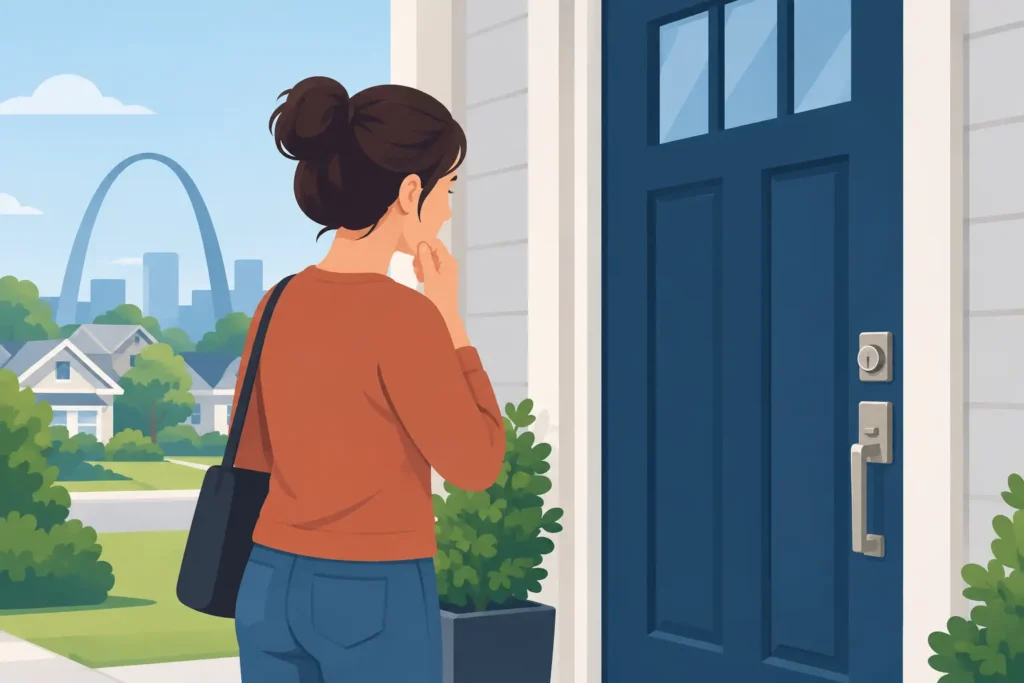
A house lockout in Chesterfield, Missouri rarely happens at a convenient time. It may be while taking the trash out before work, returning from a walk at Faust Park, arriving home with groceries, or checking on a rental property between appointments. The priority is simple: get safely back inside without turning a frustrating situation into damaged hardware, a broken window, or a security concern.
A professional mobile locksmith can assess the door, verify authorization to enter, and use careful entry methods suited to the lock and door in front of them. Just as important, they can help determine why the lockout happened and whether the lock, key, or access setup needs attention afterward.
House Lockout Chesterfield Missouri: Start Safely
Before calling for help, take a slow look at the situation. Check other exterior doors, the garage entry door, and any accessible door that you know is normally unlocked. If a trusted family member, roommate, landlord, or property manager has a spare key, that can be the fastest solution.
Do not force a locked door, pry a frame, remove a lock cylinder, or try to climb through a window. These attempts often cost more than a locksmith visit. Modern residential doors, deadbolts, strike plates, and smart locks are designed to resist forced entry. Prying can bend the door, split trim, damage weatherstripping, or leave the home less secure after you get inside.
If a child, vulnerable adult, or pet is locked inside and there is an immediate safety risk, call 911 first. Tell the dispatcher exactly what is happening. For a standard lockout without an urgent danger, a local mobile locksmith is the appropriate next call.
What a Professional Locksmith Does at Your Door
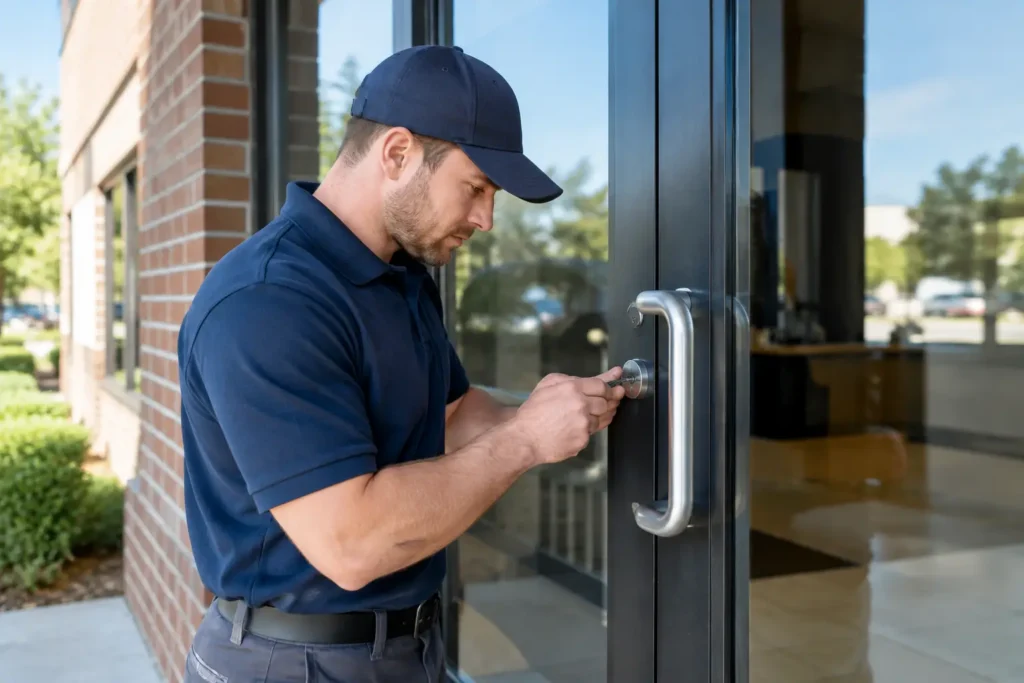
A responsible locksmith does more than arrive with tools and open a door. The technician starts by confirming that you are authorized to access the property. Depending on the circumstances, this may involve a photo ID showing the address, lease documentation, contact with a landlord or property manager, or other reasonable proof of occupancy.
After that, the locksmith evaluates the lock type, door condition, and likely cause of the lockout. A misplaced key is different from a key that turns but will not retract the bolt. A dead battery in a keypad lock calls for a different approach than a broken key lodged in a traditional knob or deadbolt.
Whenever practical, the goal is careful, non-destructive entry. Some situations require repair or replacement, particularly when a lock has failed internally, a key has broken off, or prior forced-entry attempts have damaged the hardware. A good locksmith explains the condition of the lock and the available options before moving forward.
Locks R Us Locksmith provides mobile residential locksmith service throughout Chesterfield and West St. Louis County. That means the equipment and service come to your home, whether you are near Chesterfield Valley, along Olive Boulevard, in a subdivision off Clayton Road, or in a nearby community such as Ballwin, Town and Country, Wildwood, Creve Coeur, or Manchester.
Why Lockouts Happen More Often Than People Expect
Most home lockouts are not caused by carelessness. They happen during ordinary routines, especially when hands are full or schedules change. Automatic-locking knobs can catch people off guard. A spare key may have been lent out, a keyring may have been left in a vehicle, or a child may lock the door from inside.
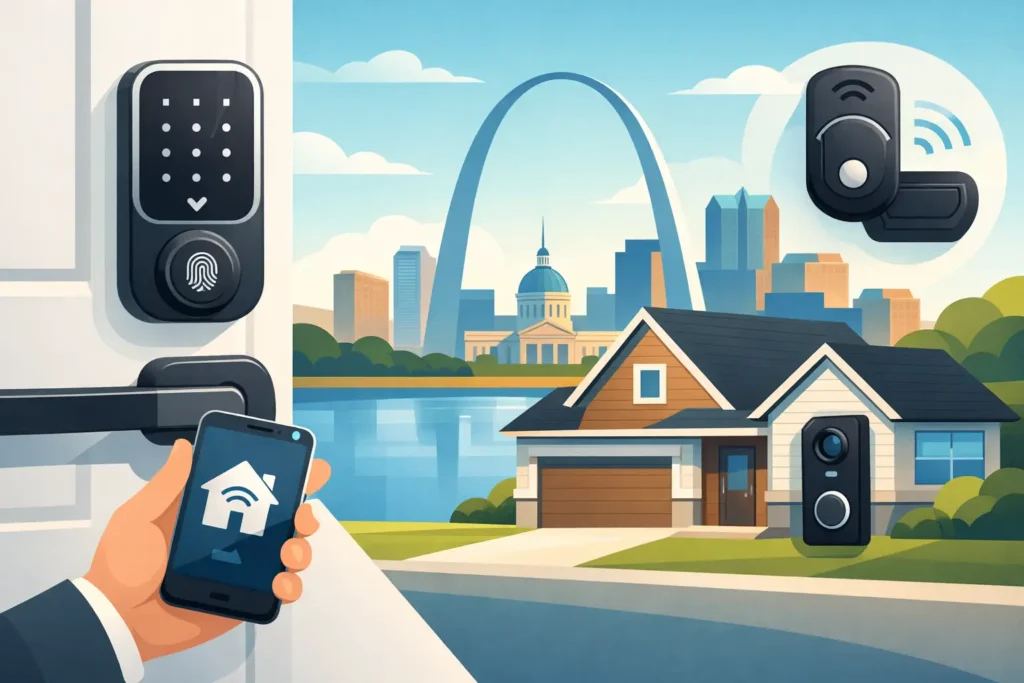
Electronic locks add convenience but introduce a few different failure points. Batteries can run low, a keypad can be programmed incorrectly, or a homeowner may forget a code that has not been used in months. Smart locks are useful for households, rentals, and people who want remote access options, but they still need sound installation and a backup-entry plan.
There are also mechanical problems that look like a simple lockout. If a key sticks, spins, or requires excessive force, the lock may be worn or misaligned. Seasonal temperature changes, settling doors, loose hinges, and a misaligned strike plate can prevent a deadbolt from operating smoothly. Forcing the key in that condition can break it or worsen the failure.
When the Key Is Inside but the Lock Is Working
This is the most straightforward scenario. The door may have locked behind you with the key on a table, counter, or hook inside. A locksmith can evaluate the lock and choose an entry method that protects the door and hardware whenever possible.
Once you are back inside, consider whether your current setup is creating repeat problems. A properly managed spare key, a keypad deadbolt, or a smart lock may make sense. The right choice depends on the household. Some homeowners prefer the reliability of a traditional key, while others value controlled code access for children, guests, dog walkers, or service providers.
When the Key Will Not Turn or the Lock Feels Broken
Do not keep applying force. A key that will not turn may indicate a damaged cylinder, a shifted door, an obstructed keyway, or a deadbolt under pressure from a misaligned frame. Repeated attempts can snap the key, creating a more involved repair.
In these cases, entry is only part of the service. The lock should be checked after access is restored. Repair may be appropriate if the hardware is in good overall condition. Replacement may be the better value if a lock is badly worn, damaged, outdated, or no longer provides the level of security you want.
Ask for Clear Expectations Before Service Begins
When you call about a home lockout, explain what you know: whether the key is lost, inside, broken, or not working; whether the door uses a deadbolt, keypad, or smart lock; and whether anyone is in immediate danger. Accurate details help the locksmith prepare for the situation.
It is reasonable to ask about service availability, estimated arrival expectations, and pricing structure. The final cost can depend on the time of service, travel, lock type, entry method, and whether repair or replacement is needed. Transparent communication matters because no two doors and no two lockouts are exactly alike.
Be cautious about anyone who offers a vague, unusually low quote without asking basic questions, then dramatically changes the price on arrival. You should understand the work being recommended and the expected charge before authorizing it. Professional service should feel clear and orderly, even when the situation is urgent.
After You Get Back In: Protect the Home and Prevent a Repeat
Getting inside solves the immediate problem, but a brief review can prevent the next one. If keys were lost outside the home, rekeying the locks is often a sensible security step. Rekeying changes the lock so the missing key no longer works, while allowing you to keep compatible existing hardware when it is in good condition.
If the lockout involved a rental, communication matters. Renters should follow lease requirements and notify the landlord or property manager as needed. Property managers may want to rekey between tenants, track issued keys, or use a controlled master key system for multiple units. The right approach balances emergency access, tenant privacy, and property security.
For homeowners, a practical backup plan is usually better than hiding a key under a mat, planter, or decorative rock. Those locations are familiar to anyone looking for an easy entry point. A trusted nearby contact, a securely managed spare, or an appropriately installed keypad or smart lock can offer a safer alternative.
It is also worth checking the whole entry door, not just the lock. A solid deadbolt, properly installed strike plate, secure door frame, working hinges, and a door that closes squarely all support reliable access and better security. If the deadbolt drags or the latch does not catch cleanly, addressing it early is easier than dealing with a failure during a lockout.
Common Questions About Home Lockouts
Can a locksmith open my house without damaging the lock?
Often, yes. The method depends on the lock, door, and condition of the hardware. A qualified locksmith will generally pursue careful, non-destructive entry when feasible, but severe mechanical failure or existing damage can make repair or replacement necessary.
Should I change my locks after losing my keys?
Rekeying is usually the first option to consider when keys are missing and you do not know who may find them. If the locks are worn, low quality, damaged, or no longer meet your needs, replacement may be the stronger long-term choice.
Can a locksmith help with a smart-lock lockout?
Yes. A locksmith can assess battery issues, programming concerns, mechanical backup-key problems, and installation issues. Not every smart lock is built or serviced the same way, so the model and condition of the device matter.
A locked door can feel like a major disruption, especially after dark, during bad weather, or when a busy household is waiting. Stay safe, avoid damaging the entry, and choose a local mobile locksmith who communicates clearly and treats your home with care.