Summary: There is no fixed rekeying schedule — what matters is who still holds a key. Rekey after moving in, losing a key, a tenant move-out, a breakup, or a break-in, and remember every door on the property, not just the front one.
It is one of the most common questions we get asked, and the honest answer is that there is no schedule. Rekeying is not like changing a smoke alarm battery. Locks do not become less secure as time passes.
What changes is who has held a key. That is the only thing that really matters, and it is why the answer is different for a family who have lived in the same house for fifteen years and a landlord who has had four tenants in three. It matters more than people expect: FBI data compiled by The Zebra shows the front door is the single most common entry point for burglars, ahead of windows, back doors, or the garage.
The Short Answer
Rekey whenever you can no longer answer this question with confidence: who could walk up to my front door right now and let themselves in?
If you have to think about it, or the list includes somebody you would rather it did not, it is time. If the answer is a short and comfortable list, you do not need to do anything.
Five Moments When It Should Not Wait
- The day you move in. You have no idea how many keys exist for your new home. Previous owners, their relatives, a cleaner, a contractor, an agent, a neighbour who watered the plants. Every one of those keys still works.
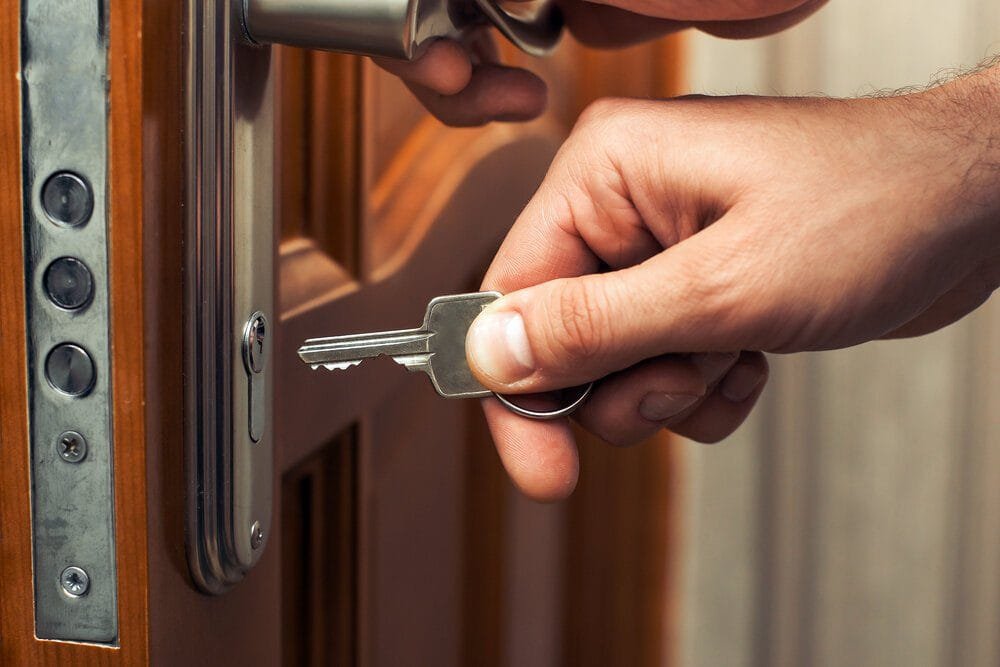
- A key goes missing. Not misplaced somewhere in the house, genuinely lost. Especially if it was on a ring with anything showing your address.
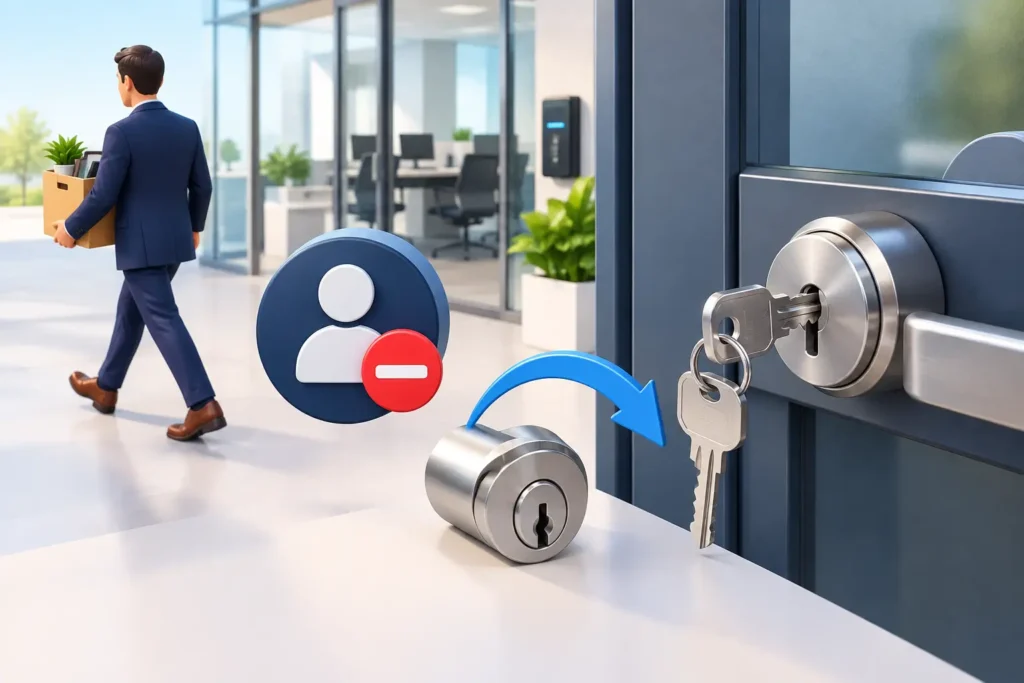
- A tenant moves out. Even a good tenant may have cut a spare for a partner or a family member, entirely innocently, and forgotten it exists.
- A relationship ends. This is a common call and there is nothing awkward about making it. Changing a lock is a normal, sensible thing to do.
- After a break-in or an attempted one. Even if entry was not gained through the door, the lock may be damaged in ways that are not visible, and the peace of mind is worth it on its own.
How Rekeying Actually Works
Most residential and commercial locks use a pin-tumbler cylinder. Inside are a set of spring-loaded pin stacks, cut to a specific pattern that only your key’s ridges align correctly. Rekeying means removing the cylinder, pulling out that pin set, and replacing it with a new set cut to a different pattern — then cutting new keys to match. The lock body, the bolt, the housing, and the exterior hardware never change. Only the internal pins and the key do.
That is why it is quick work for a locksmith and why it costs a fraction of a full hardware swap: nothing is removed from the door, no new holes are drilled, and the visible lock looks identical afterward. It is also why rekeying cannot fix a lock that is mechanically worn out, misaligned, or was cheap to begin with — the pin swap changes who has access, not the quality of the hardware itself.
What About Just Doing It Every Few Years?
Some people prefer a routine, and there is no harm in it. If you own rental property, rekeying between every tenancy as standard is simply good practice and worth budgeting for rather than deciding case by case.
For an owner-occupied home where nothing has changed, a rekey every few years is optional. Your money is usually better spent on the things that actually stop a door being forced: a proper deadbolt, and a strike plate fixed with three-inch screws that reach the timber stud behind the frame rather than just the frame itself. That single detail does more for your security than most upgrades people pay for.
Warning Signs Your Locks Need Attention
Rekeying addresses who holds a key, but it is not the fix for a lock that is physically failing. If a key sticks, a bolt will not fully throw, or a cylinder feels loose in its housing, that is a hardware problem rather than an access problem — our guide on 5 signs you need to replace your door locks walks through what each of those symptoms usually means and whether repair, rekey, or replacement is the right call.
Rekey or Replace?
Rekey when the hardware is sound and you simply want the old keys to stop working. It is quicker, it costs less, and the lock stays on the door.
Replace when the lock is worn, damaged, or not as secure as you want it to be. Rekeying a cheap builder-grade lock gives you a cheap builder-grade lock with new keys. If your goal is better security rather than different keys, replacing is the honest recommendation.
One more thing worth knowing: if several doors currently take different keys, they can often be rekeyed to match, so one key opens all of them. Most people find that more useful than they expect.
| Situation | Rekey | Replace |
| Hardware is sound, just want old keys dead | Yes | Not needed |
| Lock is worn, sticking, or damaged | Will not fix it | Yes |
| Want a higher security grade or style | No change in grade | Yes |
| Multiple doors, different keys | Can key-alike existing locks | Only if hardware also needs replacing |
| Typical cost | Lower | Higher, plus hardware |
What Rekeying Costs in 2026
A rekeying quote depends on the number and type of locks, their condition, travel and the keys required. Replacement also involves the cost of new hardware and any fitting work. Ask for an itemized total for your property; our residential locksmith cost guide explains what to compare.
Rekeying for Landlords and Rental Turnover
For rental property, rekeying between tenancies is not optional in practice — it is the baseline. National apartment turnover runs somewhere between 43% and roughly half of all units every year, which means most landlords are looking at a rekey call at least once annually per unit, and often more. Budgeting it as a fixed line item in the turnover process, rather than deciding case by case whether a given tenant seemed trustworthy, removes the guesswork and closes a gap that is easy to overlook during a busy turnover.
It also protects you as the property owner. If a unit is broken into using a key that was never invalidated after a previous tenant moved out, the liability conversation gets a lot harder. A rekey between every tenancy is inexpensive insurance against that conversation ever needing to happen. This applies just as much to a fourplex near Olive Boulevard as it does to a single-family rental. Our rekeying services can be scheduled around your turnover timeline so units are ready to show and re-let without a security gap.
Do Not Forget the Side Door
This is the mistake we see most often. Someone rekeys the front door and stops there, and the old key still opens the back door, the side gate, the garage or the basement entrance. On the larger, more spread-out properties common in the Wildwood area, that can mean four or five separate entry points to track down.
When you call, count every lock on the property, including the ones you rarely use. It costs very little more to do them all at the same visit and it is the difference between a job that works and one that only looks like it did.
How Long Does a Rekey Take?
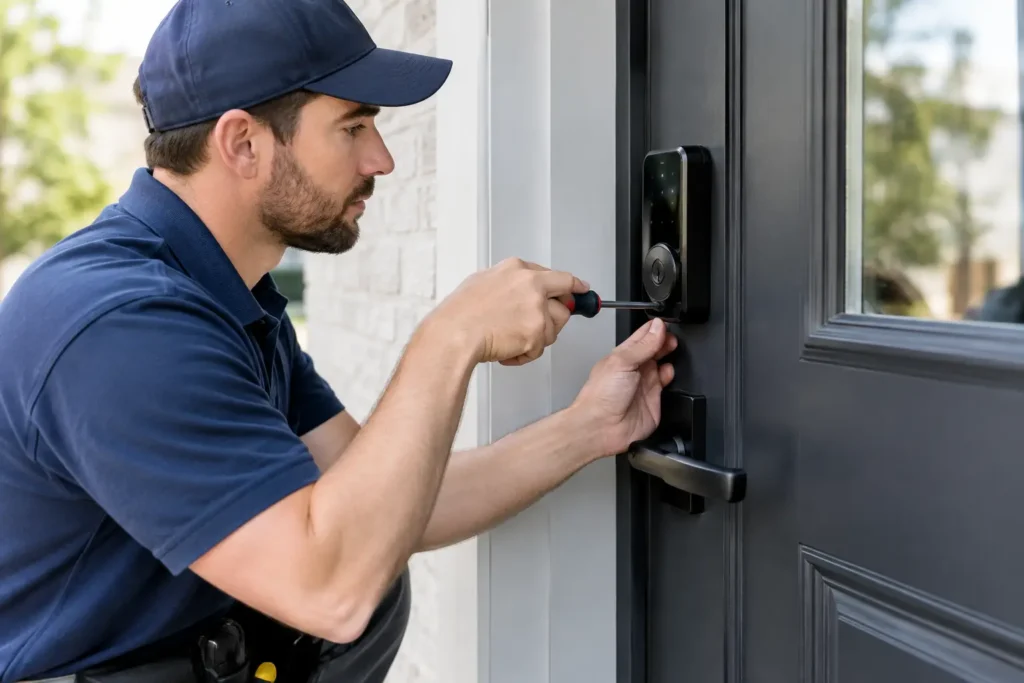
A single lock typically takes ten to fifteen minutes once a technician is on site, since the pins are swapped rather than any new hardware fitted. A whole-house job covering four or five doors, including the side gate and garage, usually runs under an hour. There is no drying time, no curing, no need to stay off the door afterward — it is usable the moment the technician hands you the new keys.
Not sure whether you need it? Call Locks R Us Locksmith on (636) 628-7803 and describe the situation. We are open every day from 8 AM to 10 PM across West St. Louis County, from the Route 100 corridor in Manchester outward, and if rekeying is not what you need we will say so.
Take Action with Locks R Us Locksmith
Whether you just moved in, lost a key, or are prepping a rental for a new tenant, a rekey is one of the fastest, lowest-cost ways to close a security gap. As a locally owned mobile locksmith serving Ballwin and West St. Louis County, we come to you and handle every lock on the property in one visit.

We provide mobile locksmith service every day from 8 AM to 10 PM. Contact us to discuss your locks, confirm availability, and request an estimate. Call (636) 628-7803 or read more about our lock rekeying service.
Frequently Asked Questions
How much does rekeying cost in 2026?
Rekeying costs depend on lock type, condition, quantity, travel and the keys required. Replacement adds hardware and fitting costs. Ask for the total service-call, labor and parts charges before approving the work.
Does rekeying change the lock itself?
No. Rekeying replaces the internal pin set inside the existing cylinder and cuts new keys to match. The lock body, bolt, and exterior hardware stay exactly the same and look identical afterward.
Can multiple locks be rekeyed to use one key?
Yes. If several doors on a property currently take different keys, they can usually be rekeyed to match so a single key opens all of them, which most homeowners find more convenient than expected.
How long does rekeying take?
A single lock typically takes ten to fifteen minutes once a technician is on site. A whole-house job covering four or five doors usually takes under an hour, with no drying or curing time afterward.
Should landlords rekey between every tenant?
Yes, as standard practice. National apartment turnover affects roughly half of all units each year, and rekeying between tenancies closes a security gap that is easy to overlook during a busy turnover.
Will rekeying fix a lock that sticks or feels loose?
No. Rekeying addresses who holds a key, not mechanical wear. A sticking key, a bolt that will not fully throw, or a loose cylinder points to a hardware problem that needs repair or replacement instead.