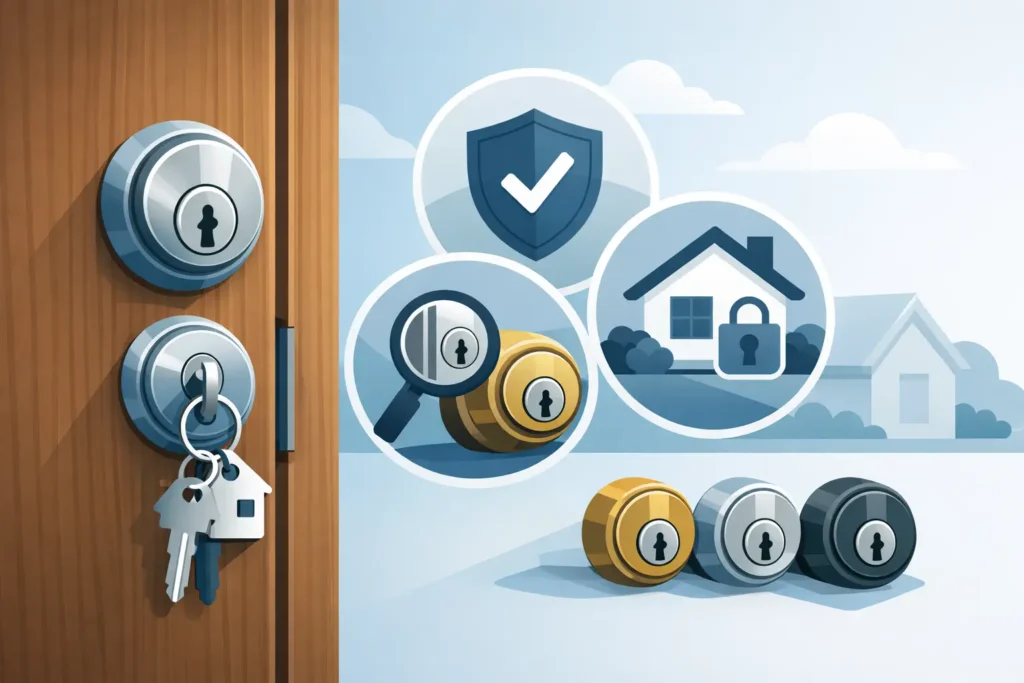
How to Rekey Locks After Moving Into a New Home
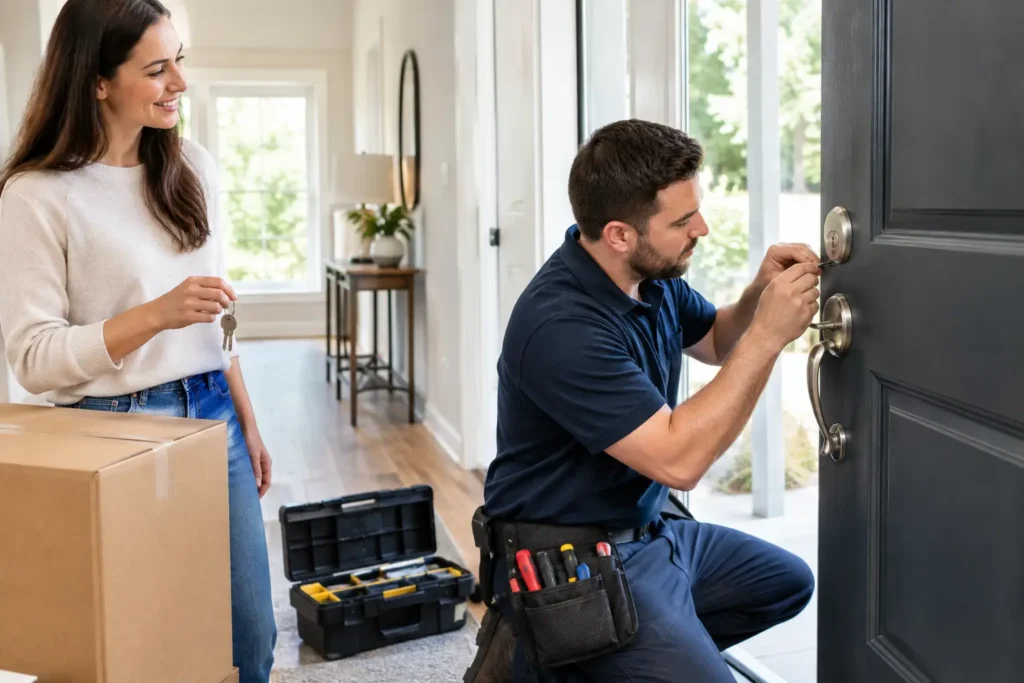
When you move into a new house you’ll need to rekey all the locks (i.e. change the inside of the lock so that the old keys won’t work). Start by making a list of all the external doors and check that those locks are working properly. A locksmith will be able to advise you as to which locks can be rekeyed, which ones need to be repaired or replaced and whether any of the doors can be set up to take the same key.
The prior owner may have handed out keys to family members, neighbours, contractors, pet sitters, cleaners and/or previous tenants. Even if all of those people were perfectly trustworthy, keys can go missing and are extremely difficult to keep an accurate record of. Rekeying gives you a fresh start without the need to replace every lock and deadbolt.
For a quick reference as you’re going through your new home, take a look at our lock rekey checklist. That’ll help you understand the options at each stage.
How to rekey locks after moving: Start with a walk around your property and write down every exterior entry point. Front, back, side, garage-to-house, basement, patio, and any doors on a detached garage or shed. Don’t forget the little ones, e.g., a service entrance behind the house or a door from the garage into a finished basement.
Write down what type of lock is on each door. The average home will have a knob or lever with a key and a deadbolt. Some will have a handleset, mortise lock, keypad deadbolt, smart lock, or a lock with a particular keyway. Look out for signs of wear, such as a key that sticks, a deadbolt that’s difficult to turn, loose bits, or a door that won’t close properly. All of those could indicate a bigger problem than just the key.
This inspection will help you determine which locks can be re-keyed and which doors may need fixing, fitting, or replacing. A good lock is just one element of the whole package. If the strike plate is loose or the door doesn’t square up properly, a new key won’t fix the actual problem.
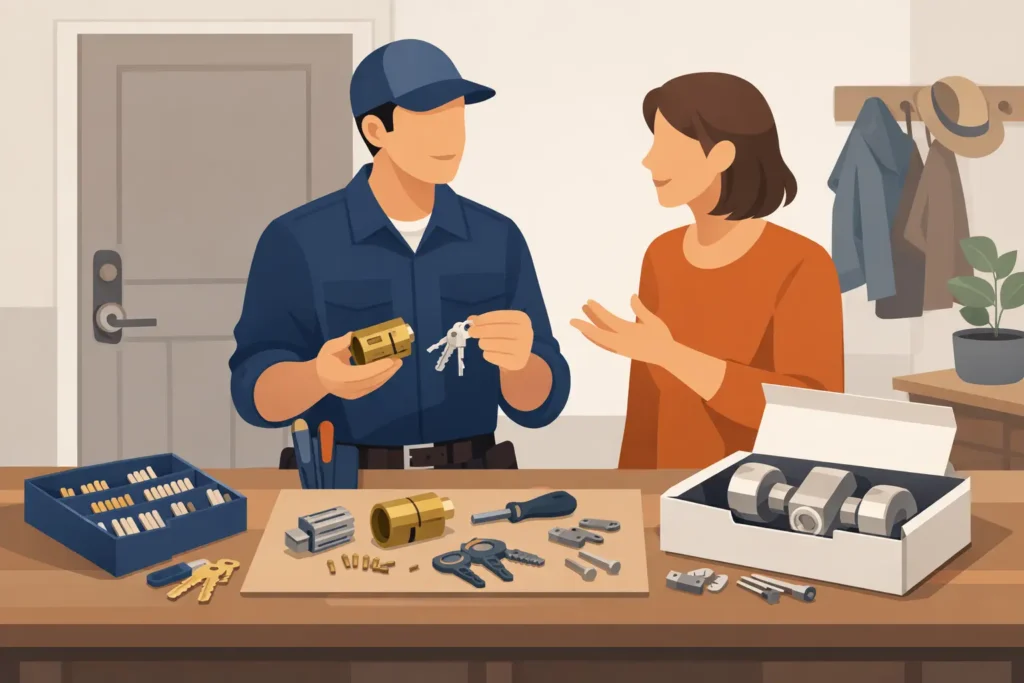
A standard pin tumbler has a cylinder with a series of small pins inside. The pins are set to match the cuts on a particular key. When you rekey, you alter the pin configuration so that the old key will no longer work and the new one will.
The lock hardware itself generally stays on the door. That’s the main benefit: if the deadbolt or lever is in good condition, rekeying is often far less intrusive and less expensive than replacing the lock. A locksmith can generally do the job on site and provide the newly cut keys as part of the process. Rekeying is not the same as making a key copy. A key copy lets more people use the existing lock. Rekeying changes the lock so the old key no longer works.
For many people, rekeying is a good way to reduce the number of spare keys you have. If you have compatible locks on several external doors, you may be able to set them all to work with just one key. That depends on the lock brands, keyways, and the condition of the locks. Some can be matched; others won’t unless you replace the cylinders or hardware.
Decide Whether Rekeying or Replacing Is the Better Choice
Our guide on rekeying vs. replacing locks covers both options. First, decide whether your main concern is that you don’t know who has the keys, or whether there’s an issue with the lock, door, or frame.
Rekeying is the way to go if the lock is fairly new, it’s a good lock, and you need the security. It’s a sensible option when you’ve just bought a property, when a tenant moves out, or if you’ve shared keys and aren’t sure who still has them.
Replacement may be better if the existing lock is damaged or corroded, poor quality, or very difficult to operate. It may also be appropriate if the door has no deadbolt at all, the deadbolt has a very short bolt throw, or the hardware doesn’t work with how your household uses the entry. A new homeowner may well opt for a keyed deadbolt on one door and a smart lock or keypad on the others. You should also check the door and frame condition. A good-quality new deadbolt will do nothing if it’s fitted to a poor-quality strike plate or short screws in a soft frame. A locksmith can assess the whole door and advise where repairs or replacements are actually needed, rather than just replacing hardware that isn’t working.
Smart locks need their own check once you’ve moved in. You may need to reset the app or set a new code, but if the previous owner still has their backup keys, that may not be enough. On many locks, you can rekey, replace, or deal with the mechanical part separately. You need to ensure all old user codes are removed, the lock is linked to your account, and you control any emergency override key.
Can you rekey a lock yourself?
Homeowners can rekey some common locks if they have the right kit, know the keyway, and are comfortable with basic tools. It’s not as easy as it looks, though. You need to remove the cylinder properly, set the pins in the correct order, reassemble the lock, and test it all without breaking any of the little bits.
A mistake can leave your lock unreliable or completely inoperative whilst the door is shut. It’s also very easy to buy a kit that doesn’t actually match the keyway or cylinder in your lock. For a simple lock, a DIY approach may be acceptable. For a whole house with a mix of brands, high-security cylinders, smart locks, and/or worn locks, professional rekeying is probably the better option.
Renters should check their lease before changing any locks or cylinders. The landlord or property manager may have to approve the work, may require an emergency key to be kept, and may rekey between tenants. If you’re in the business of managing rentals, rekeying between tenants is a simple way to protect your tenants and your property without replacing good hardware every time.
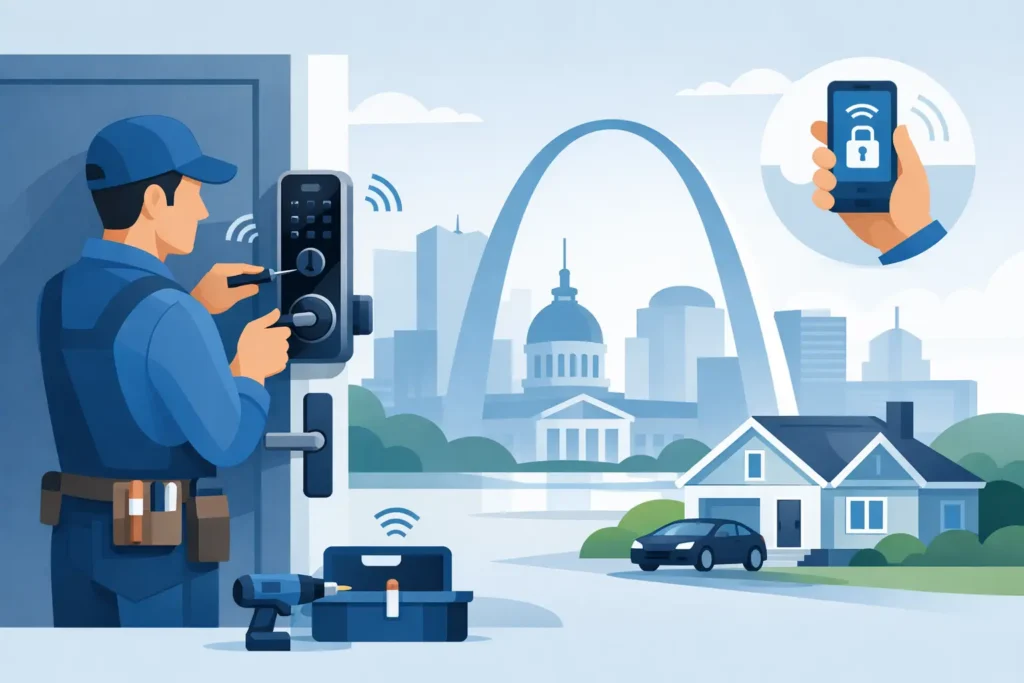
A professional rekeying visit: the mobile locksmith brings all the tools and key materials to your house, so you don’t have to go anywhere. It starts with an assessment of your doors, the type of locks, and how many keys you’ll need. You can discuss whether you’d like all your external doors to use the same key, whether you want some doors to have a separate key, or whether you’d like a security upgrade on one particular door.
The locksmith will check that each lock works correctly, rekey any locks that can be rekeyed, and test the new keys on both sides of the door. If a lock is worn out or a door needs fixing, they should explain what’s required prior to doing any further work. Be clear about what’s going on and what the costs are, especially during a move.
Locks R Us Locksmith in Ballwin provides mobile home rekeying and residential lock replacement throughout the surrounding West St. Louis County communities. Check out our service in Chesterfield, Wildwood, Ladue, Creve Coeur, Town and Country, and Manchester, or view our full service area. We’ll look at the exterior doors first, but moving is also a good time to consider other ways into your home. Garage remotes, keypad codes, gate locks, mailbox and shed keys, and any interior doors leading to an office, storage, or utility room are all worth a look. If you have a security system, a camera account, or a smart garage controller, it’s a good idea to transfer ownership and change passwords as part of the same project.
Write down who gets new keys, and review who has access. Moving into a new house is full of unknowns, of course. Rekeying your locks is one of the simplest things you can do to remove a big worry, and it means you can enjoy your new home knowing you’re the only one with the key. ets you enjoy your new place knowing you’rAfter the work, test every affected latch and deadbolt with the door open first and then with the door closed. Account for the new keys, and make sure the old keys no longer work in the rekeyed cylinders. Check the patio and window locks, the garage remote, the side gates, and the mailbox/sto access separately. Rekeying the house door lock doesn’t cover all other access points. If you find a weak strike plate, loose hinges, or a damaged frame during the visit, ask what repairs/reinforcements are needed. Rekeying won’t fix any of those. Also make a safe plan for spare keys rather than just hiding one outside in an obvious place. Rekeying after a move. Rekeying after a move
Call (636) 628-7803 with your town, the number of locks and a,ny known door problems. ,We’reanyn daily from 8am to 10pm so pl,ease call to confirm we’re available. For your next household or keyholder change, our guide to when to rekey your locks will tell you other times to consider access.
About the author
Locks R Us Locksmith
Locks R Us Locksmith is a mobile locksmith based in Ballwin, serving homes and businesses across West St. Louis County.
Popular articles
Need locksmith help?
Categories
- Home Security & Door Locks
- Rekeying & Lock Changes
- Lockouts & Emergency Help
- Business & Commercial Security
- Smart Locks & Keyless Entry
- Lock Problems & Repairs
- Landlord & Rental Security
- Locksmith Costs & Hiring Tips
Tags
Emergency · Installation · Rekeying · Security