A business door that will not latch, close, unlock properly, or provide a safe exit can stop operations fast. Commercial door hardware is more than a lock on a storefront or office door. It is a connected system of locks, closers, hinges, exit devices, strikes, handles, and access controls that must work together every day.
For business owners and property managers in Ballwin, Chesterfield, Wildwood, and throughout West St. Louis County, the right hardware protects people, inventory, records, and the ability to open on time. The wrong hardware can create security gaps, employee frustration, damaged doors, and code concerns.
What Counts as Commercial Door Hardware?
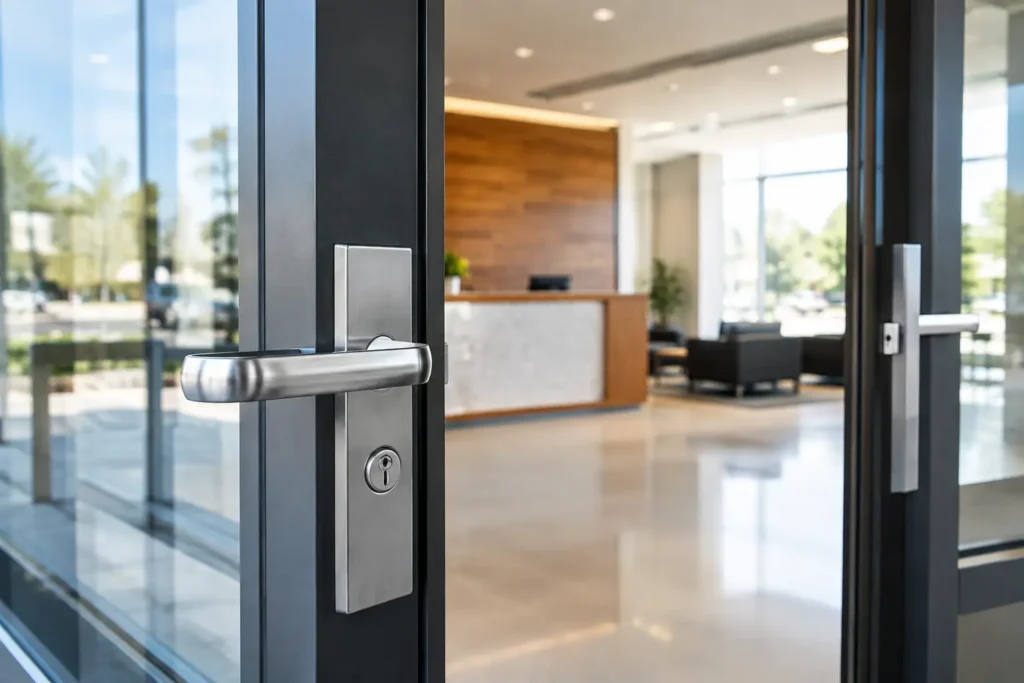
Commercial door hardware includes the components that secure, control, and support a business door. A typical exterior door may have a commercial-grade lever lock or mortise lock, a deadbolt or electric strike, a door closer, hinges, weather protection, and an access-control component. A rear exit door may instead require panic hardware that allows people to leave quickly while restricting entry from outside.
The pieces need to match the door, frame, opening direction, occupancy, and how the building is used. Installing a strong lock on a worn aluminum storefront door, for example, will not solve a closer problem or a misaligned frame. Likewise, a new door closer cannot correct a latch that does not line up with its strike.
This is why commercial door work should begin with an evaluation of the complete opening, not just the part that appears to have failed.
Start With the Door’s Job
The best hardware depends on what the door needs to do during a normal business day and during an emergency. A medical office has different needs than a warehouse, restaurant, retail store, or multi-tenant office building.
An employee-only exterior door may need controlled entry, automatic locking, and audit capability. A customer entrance needs hardware that is easy to operate, durable under frequent use, and appropriate for accessibility requirements. A stockroom might need restricted key access, while a fire-rated corridor door must close and latch correctly to perform its intended role.
Before choosing hardware, consider who uses the opening, how often it is used, whether it needs free exit, whether the door is fire-rated, and what happens when power is lost. These details affect the type of lock, closer, exit device, and access system that make sense.
Exterior and High-Traffic Entrances
Storefront and main-entry doors often receive the hardest daily use. Heavy doors, temperature changes, carts, customer traffic, and repeated opening can wear down pivots, hinges, closers, and latch components.
For these openings, commercial-grade hardware should be selected for the door weight and traffic level. A closer that is too weak may leave the door partly open. One that is set too aggressively can slam the door, damage the frame, or make entry difficult for customers. Proper adjustment matters as much as the hardware itself.
Lever handles are often a practical choice because they are easier to operate than round knobs. Depending on the application, a cylindrical lever lock, mortise lock, or storefront deadbolt may be appropriate. The answer depends on the door construction and the level of security required.
Employee Doors, Offices, and Storage Areas
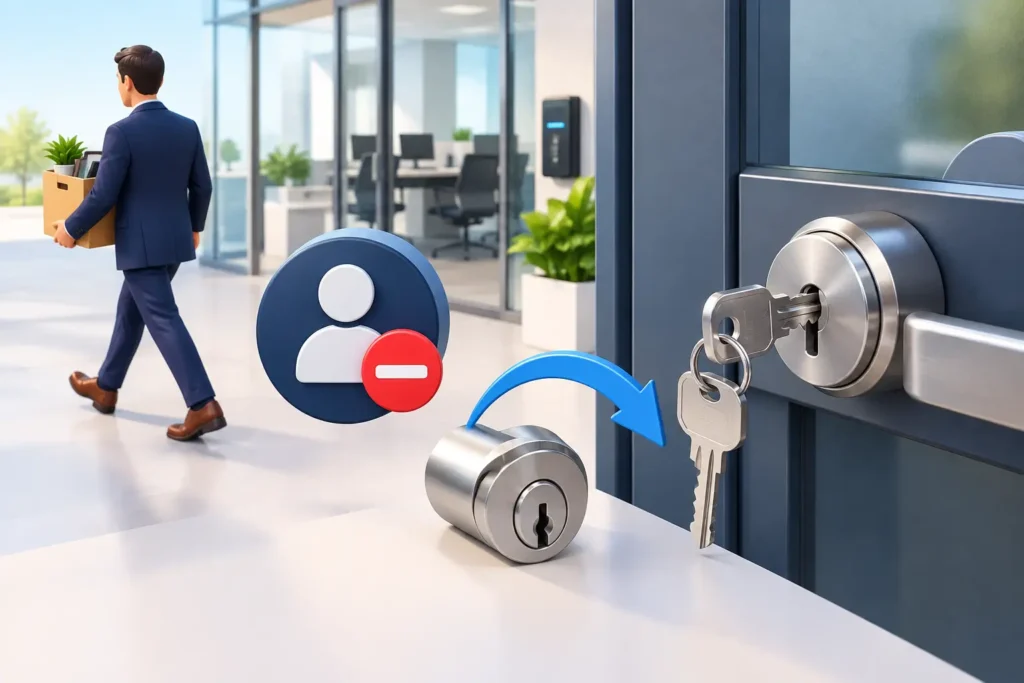
Interior and employee-only doors usually require a balance between access and accountability. Traditional keyed locks can work well for a small team, but keys are easy to copy, lose, or retain after an employee leaves.
Rekeyable commercial locks, restricted key systems, master key systems, keypad locks, and electronic access control can all help manage access. A master key system is useful when managers need access to several areas while individual employees only need access to assigned rooms. It must be planned carefully, however. Poorly designed keying can become difficult and expensive to manage as a business grows.
For a property manager, a consistent keying plan across suites, maintenance rooms, gates, and utility spaces can save time during turnover and service calls. For a small office, a straightforward rekey after staffing changes may be the right solution.
Exit Doors and Panic Hardware
Panic bars, also called exit devices, are designed to allow fast egress by pushing on a bar or touchpad. They are common in schools, medical facilities, assembly spaces, warehouses, and many public-facing businesses. On doors where panic hardware is required, substituting a standard lock or adding an incompatible deadbolt can create a serious safety problem.
Exit hardware must allow occupants to leave without special knowledge, a key, or extra steps. The specific requirements depend on the building, occupancy, local codes, and the authority having jurisdiction. Fire-rated openings may also require labeled hardware and compatible components.
If a panic bar is loose, difficult to operate, fails to latch, or has been altered over time, it should be inspected rather than ignored. A door that appears secure from the outside may still fail to provide reliable emergency egress.
Common Problems That Point to Hardware Trouble
Most hardware failures give warning signs before a lockout or security issue occurs. A door that drags on the threshold, must be pushed or pulled to latch, closes too fast, or will not close fully needs attention. So does a lever that sags, a key that sticks, a panic bar that feels loose, or an electric strike that buzzes but does not release.
These symptoms can be caused by worn parts, door movement, loose mounting screws, poor alignment, weather changes, or impact damage. In commercial settings, repeatedly forcing a door shut can make the repair more involved. It may bend hardware, damage the frame, or wear out a latch that was only slightly out of alignment at first.
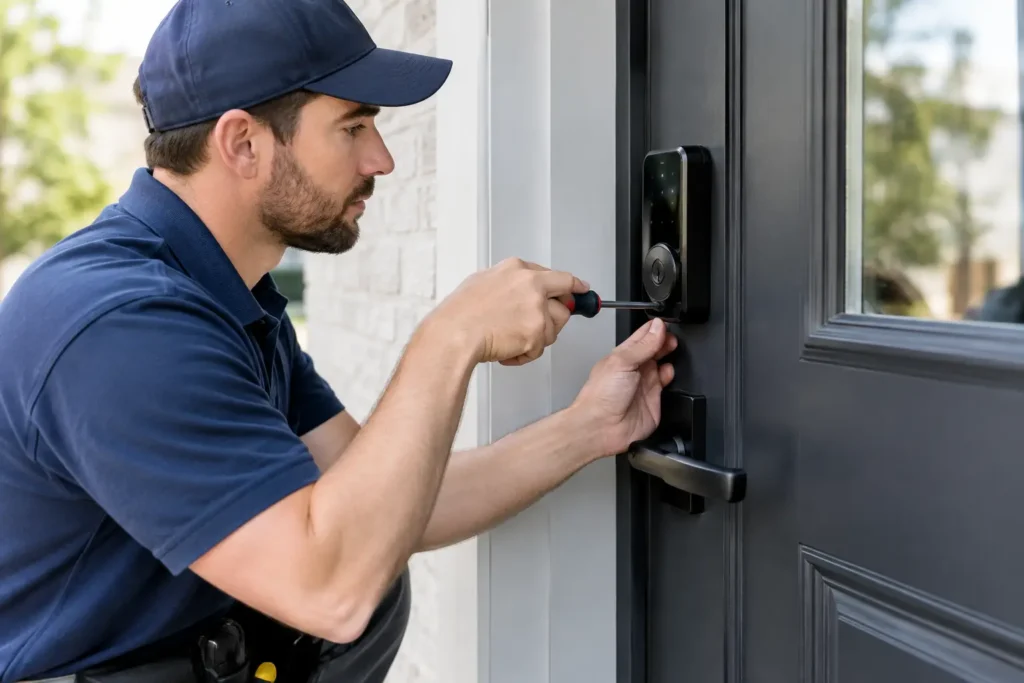
A professional repair focuses on the source of the issue. Sometimes that means adjusting a closer or strike. Other times it means replacing worn hinges, repairing the door prep, installing a better-matched lock, or addressing the frame itself.
Security Should Not Interfere With Safe Exit
Businesses sometimes respond to theft concerns by adding extra locks, chains, or slide bolts to exit doors. While the goal is understandable, an added device can interfere with emergency exit requirements and may expose the business to risk.
The better approach is to use hardware designed for the opening. Options can include exit devices with exterior trim, alarmed exit hardware, controlled access on the entry side, door-position monitoring, or improved key control. The right solution should keep unauthorized people out without preventing employees and customers from getting out when they need to.
Electronic access can add convenience, but it also brings decisions about credentials, battery backup, wiring, and what the door does during a power outage. Some doors should fail secure, remaining locked from the outside when power is lost. Others may need to fail safe and release for life-safety reasons. This is not a one-size-fits-all decision.
When Repair Makes Sense and When Replacement Is Better
A quality commercial lock, closer, or exit device can often be repaired if replacement parts are available and the main body is still in good condition. Repair is frequently sensible when a closer only needs adjustment, a latch is worn, or a lever trim component has failed.
Replacement may be the wiser choice when hardware has repeated failures, parts are obsolete, the door has changed use, or the existing setup no longer provides appropriate security. A business that has experienced several employee key losses, for example, may benefit more from a managed master key system or keypad access than from another basic rekey.
Cost matters, but so does downtime. The least expensive part is not always the least expensive outcome if it fails early, does not fit the door correctly, or requires repeated service calls. Selecting commercial-grade hardware suited to the opening usually provides better long-term value.
A Practical Plan for Business Owners and Property Managers
Walk your property and test each active door. Confirm that it closes and latches on its own, locks as intended, opens easily from the exit side, and shows no obvious loose or damaged hardware. Pay special attention to rear doors, employee entrances, restrooms, storage rooms, and doors used during deliveries. These are often overlooked until they create a problem.
Keep a record of who has keys or credentials, particularly after employee turnover, tenant changes, or vendor access. When keys are unaccounted for, rekeying is often a direct and cost-effective way to restore control. If several doors serve different staff levels, ask about a properly planned master key system rather than adding random keys over time.
For businesses in Ballwin, Manchester, Fenton, Kirkwood, Creve Coeur, Ladue, and nearby Greater St. Louis communities, Locks R Us Locksmith provides mobile commercial locksmith service at your location. That includes evaluating door and lock concerns, repairing or replacing commercial hardware, rekeying locks, and helping businesses address panic-bar, closer, and access issues with clear expectations.
A commercial door should not become part of the morning routine because everyone has learned the special way to push, lift, or pull it. Addressing small hardware problems early helps protect your building, keeps staff moving, and gives customers a safer, more professional experience at the door.