A missing office key, a door that will not latch, or a failed panic bar can stop a normal workday quickly. An office locksmith Creve Coeur businesses can call should do more than open a locked door. They should help restore access carefully, identify the cause of the problem, and recommend a practical repair or security improvement when it makes sense.
Creve Coeur offices range from small professional suites to medical practices, retail locations, corporate facilities, and multi-tenant commercial properties. Each has different access needs, but the priorities are similar: protect the building, keep employees and customers moving safely, and avoid unnecessary disruption. A mobile commercial locksmith brings the equipment and experience to the location, which is especially valuable when a door or lock issue cannot wait.
When an Office Locksmith in Creve Coeur Is Needed
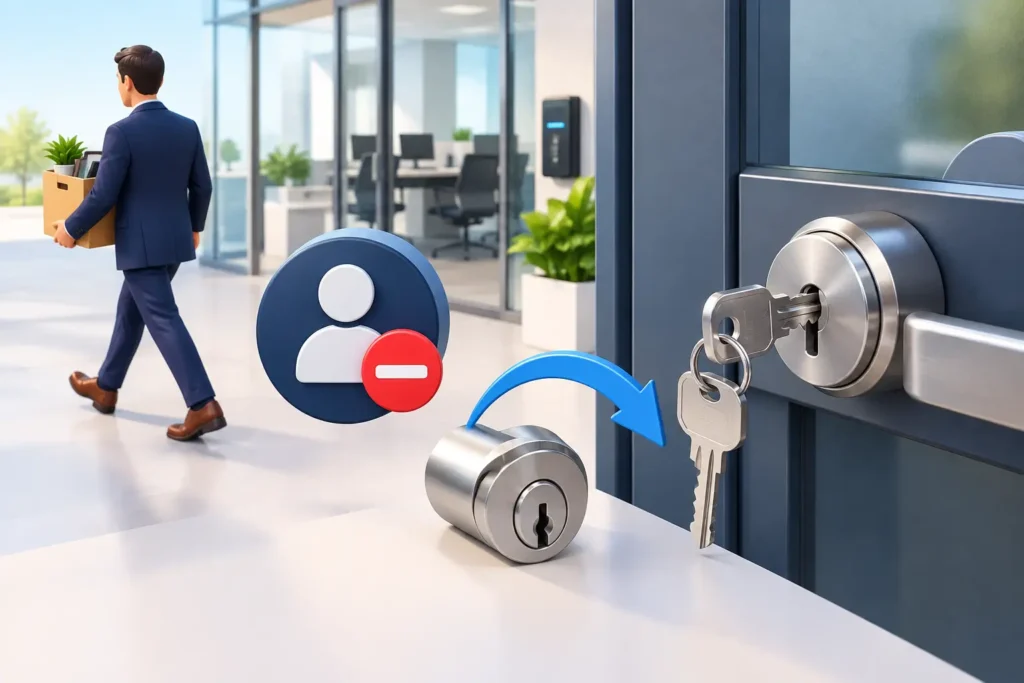
Commercial lock and door problems rarely arrive at a convenient time. A manager may find that an employee with a key has left the company, a key breaks in the cylinder before opening, or a front entrance will not secure properly at closing. Sometimes the problem is an actual lockout. Other times, the door is technically open but no longer locking, latching, or closing as it should.
Common reasons to call for commercial locksmith service include office lockouts, lost or unreturned keys, employee turnover, damaged locks, worn keys, broken door closers, and problems with exit devices. Property managers may also need a unit rekeyed between tenants or a common-area door repaired before it becomes a larger security concern.
The right response depends on the situation. If a staff member is locked out during business hours, careful entry may be the immediate priority. If keys are missing or access needs have changed, rekeying may provide a more sensible solution than replacing otherwise functional hardware. If the lock is worn, incompatible, or repeatedly failing, replacement can be the better long-term choice.
Rekeying Helps Control Who Has Access
Rekeying changes the internal pins of an existing lock so an old key no longer works. For many offices, this is one of the most practical ways to regain control after a staffing change, tenant turnover, or misplaced key.
Rekeying is usually appropriate when the existing lock is in good condition and the business wants new keys without replacing the entire lock. It can be more economical than new hardware, but it is not always the answer. A damaged lock, a low-quality lock that has become unreliable, or hardware that does not meet the building’s current needs may warrant replacement instead.
A commercial locksmith can assess the condition of the cylinder, keys, strike plate, and door alignment before recommending work. That assessment matters because a new key will not solve a door that is sagging, rubbing the frame, or failing to latch. Addressing the complete door-and-lock system helps prevent the same disruption from returning a few weeks later.
Master Key Systems for Offices With Different Access Levels
A master key system allows different people to access only the areas they need while designated managers or facilities staff retain broader access. For example, individual employees may have keys to their own offices, while a manager can access several offices and a property owner has access to the full suite or building.
This arrangement can reduce the number of keys people carry and make access easier to manage. It also requires planning. Giving every key broad access may be convenient at first, but it weakens accountability and can create a difficult rekeying project later. A well-designed system balances day-to-day convenience with reasonable limits on access.
Before creating or expanding a master key system, it helps to consider who needs access to exterior doors, private offices, supply rooms, records storage, IT closets, and maintenance areas. Medical offices, financial services firms, and businesses that handle sensitive materials may need tighter separation than a small office with a shared workspace. The appropriate design depends on the layout, staffing structure, and security requirements of the business.
Door Closers, Panic Bars, and Commercial Hardware Matter
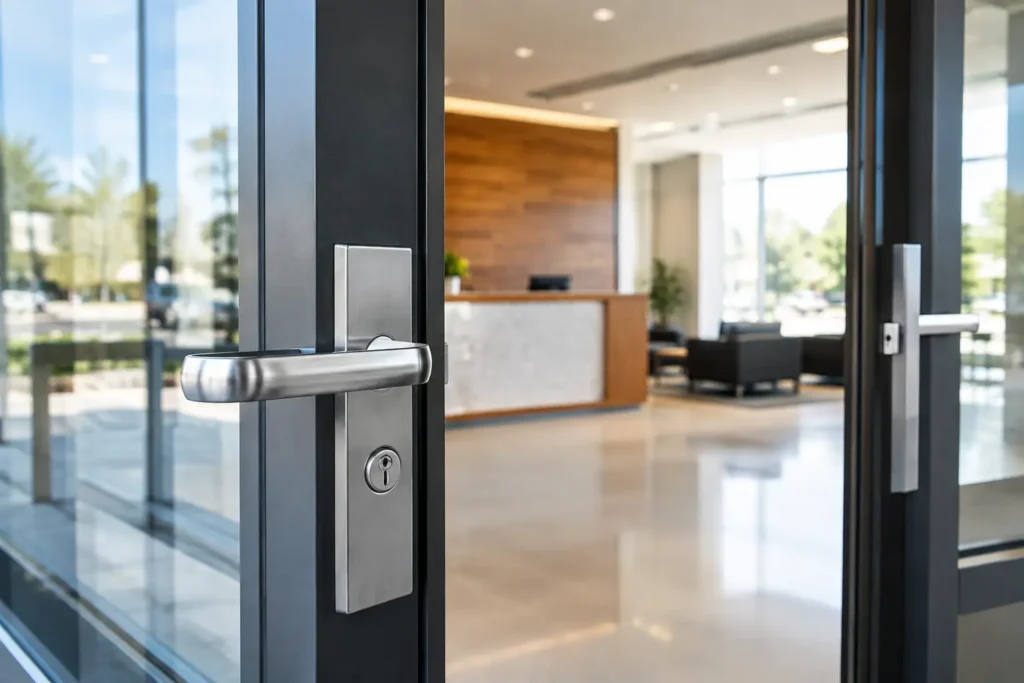
Commercial security is not only about the lock cylinder. A door needs to close fully, latch consistently, and allow safe egress in an emergency. When any part of that system fails, employees may prop a door open, struggle to enter, or find an exit device difficult to operate.
Door closers are a frequent source of frustration when they are worn, leaking, improperly adjusted, or paired with a misaligned door. A door that slams can be disruptive and hard on hardware. A door that closes too slowly or does not latch can leave the office unsecured. Proper adjustment or replacement should account for the weight of the door, traffic level, weather exposure, and how the door interacts with its frame and lock.
Panic bars and other exit devices deserve prompt attention when they stick, fail to latch, or require excessive force to operate. These devices are intended to support safe exit, not simply restrict entry. A commercial locksmith can inspect the hardware, make appropriate repairs, and help identify when replacement is the safer path.
Responding to an Office Lockout Without Making It Worse
An office lockout can be stressful, particularly when employees are waiting outside, a client appointment is scheduled, or important equipment is inside. Trying to force the door, pry the hardware, or use improvised tools often causes more damage than the original problem. It can bend the frame, damage a latch, or turn a straightforward service call into a door repair.
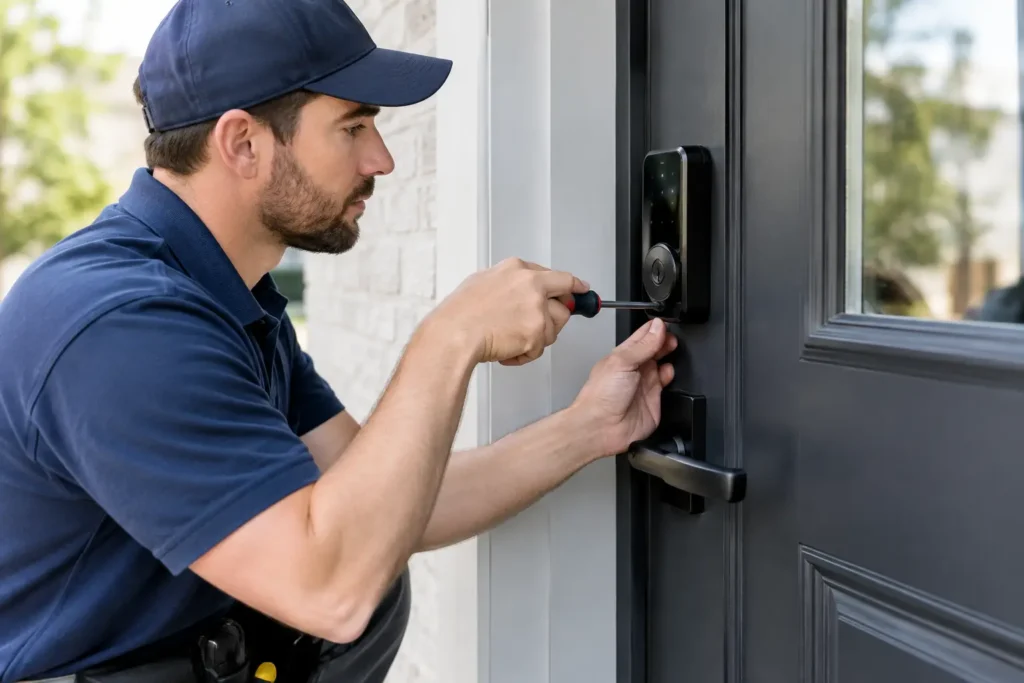
A professional locksmith starts by verifying authorization and evaluating the entry point. The goal is careful access whenever possible, followed by a check of the lock and door hardware to determine why the issue occurred. If a key was lost, an employee left with access, or a lock failed unexpectedly, the locksmith can discuss next steps on-site rather than leaving the business with the same unresolved security concern.
For businesses in Creve Coeur and across West St. Louis County, a mobile locksmith can come to the office, retail space, warehouse, or professional suite with the tools needed for many common commercial lock and hardware needs.
Choosing the Right Commercial Locksmith Service
Commercial customers need clear answers, not vague promises. Before work begins, the locksmith should explain what is wrong, what options are available, and what the expected cost and outcome will be. A simple rekey may be all that is needed. In another case, the best recommendation may be replacing worn hardware, correcting a door alignment issue, or adding an access solution that better fits the way the office operates.
It is also worth considering future needs. If a business has frequent staffing changes, a scattered collection of keys, or several doors with unrelated hardware, this may be the right time to organize access. Standardizing compatible commercial hardware and documenting key control can save time during future repairs, lockouts, and tenant transitions.
Locks R Us Locksmith provides mobile commercial locksmith service for offices in Creve Coeur and nearby communities including Ballwin, Chesterfield, Town and Country, Des Peres, Kirkwood, Manchester, Wildwood, and Ladue. The focus is careful workmanship, straightforward communication, and service that supports the long-term security of the property.
A lock or door problem does not need to become a full day of lost productivity. When something is not working correctly, address it before staff start working around it. A prompt inspection and the right repair can keep the office secure, accessible, and ready for the next business day.