Commercial rekeying after an employee leaves
When an employee leaves your organization, your security process should continue through their last day and after. Rekeying helps you control access to the building, restricted rooms, storage, and more. This prevents future issues with old keys.
In Ballwin, Chesterfield, Wildwood, Town and Country, and across West St. Louis County, rekeying is usually done on site and is much less disruptive than changing all the locks. The best choice depends on the employee’s role, which keys they had, your hardware’s condition, and your access plan.
Why rekey when an employee leaves?
Keys are easy to copy, hard to track, and often shared without anyone noticing. A former employee may have made a spare key and given it to a colleague, or they may have lost one without anyone realizing. A key issued years ago can keep circulating long after the individual concerned has left.
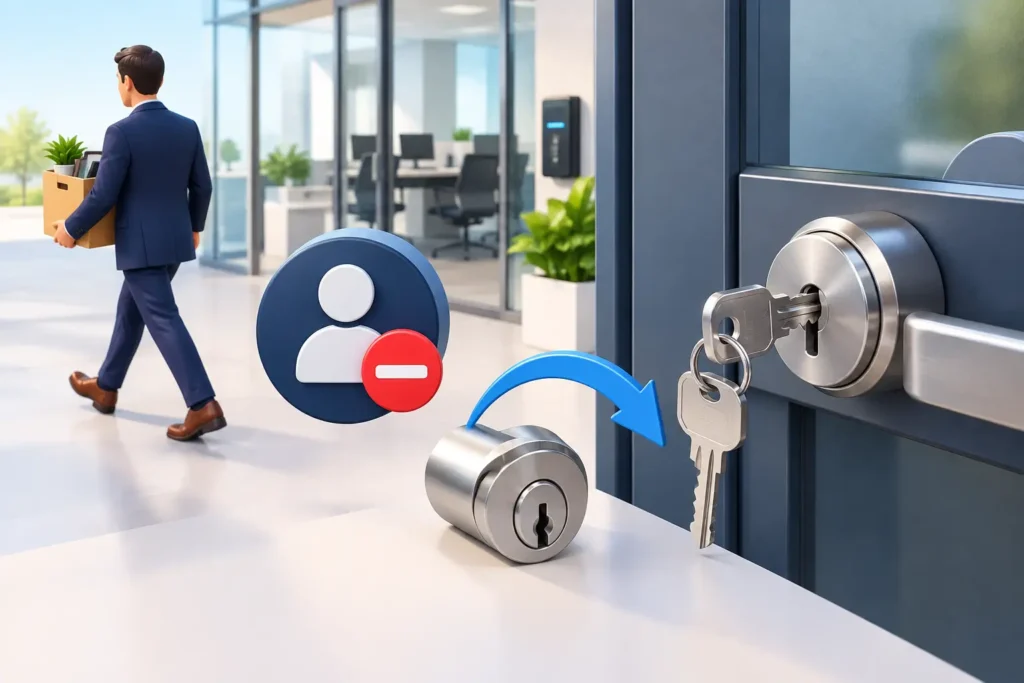
Rekeying changes the lock’s pins so your old keys won’t work. The door stays the same; you get new keys. This is usually a quicker, cheaper option than replacing the lock.
The point isn’t to be suspicious of every individual who leaves. It’s about maintaining a consistent security policy. You protect your business, avoid awkward exceptions, and give your managers a clear record of what’s been done.
When commercial rekeying is the right move
Rekeying is warranted if a former employee had a key to an external door, office, stockroom, records room, server closet, cash area, warehouse, or mailbox. It’s especially important after a resignation, dispute, unreturned key, or management-level departure.
Also, if you have a master key, losing it could affect many more doors than just one. A locksmith can review your key system and advise whether you need a rekey, a full rekey, or a completely new master-key system.
Sometimes rekeying isn’t the answer. If the lock is old, damaged, or doesn’t fit the door properly, replacement may be the better long-term solution. If you’ve had ongoing problems with keys, restricted keyways, electronic access, or both, it may be worth looking at those.
Start with the access, not just the front door
The front door is obviously the place to start, but it shouldn’t be the only door you look at. Before you book any service, consider where staff can actually get in and what keys they have. That could be the back delivery door, the staff entrance, the interior offices, the maintenance rooms, the gates, the storage cages, the file cabinets, and the shared commercial suites.
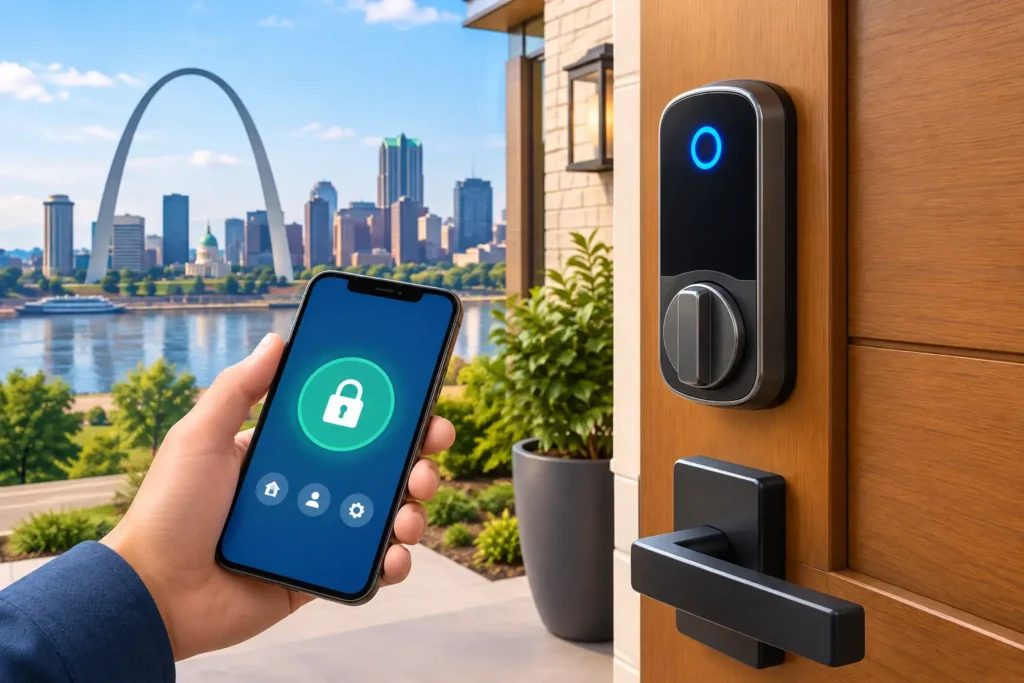
Managers should also look for subtler ways someone could get in. Did the employee have a key to a shared area? A keypad code? An alarm code? A garage remote? A smart lock? An access card? Rekeying the door won’t stop them from using those other entry points. You’ve got to look at each of those individually.
If you have a small office with just one or two external doors, rekeying is usually straightforward. In a medical office, restaurant, store, warehouse, or multi-tenant building, access can be much more complex. Always check everything before the locksmith arrives to ensure you don’t miss any doors and the job gets done correctly.
Rekeying versus replacing commercial locks
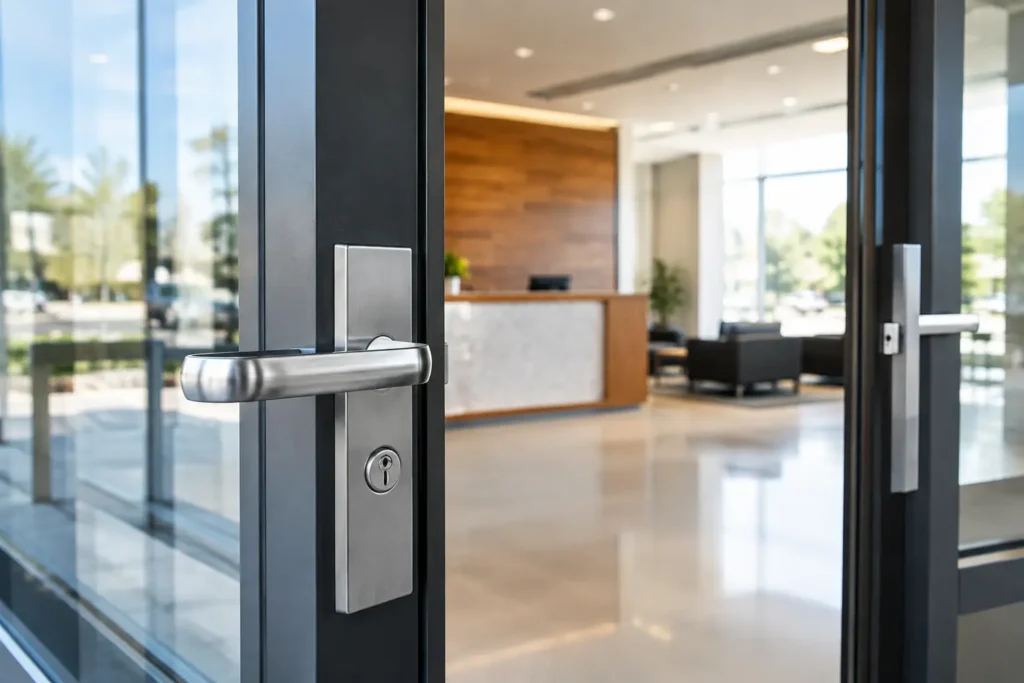
Rekeying is normally the best option if your locks are secure and we can rekey them to fit your doors. We’ll remove the cylinder, service it, rekey it (change the pins), test it,t and then give you new keys. The old keys will no longer work in that lock.
You may need to replace a lock if it isn’t working properly or if you want higher security. If a door won’t latch, has a loose handle, sticks in the frame, or has a poor-quality deadbolt, a simple rekey probably won’t be enough. For exit doors, you need the right hardware to ensure they open in an emergency. Never compromise security for a safe exit.
Sometimes it’s all down to planning. If you’ve had a myriad of different keys for your locks over the years, an employee leaving is a good opportunity to implement a simpler keying plan. A good keying plan means your staff has fewer keys and your sensitive areas are better controlled.
Protect key control after the rekey
Rekeying gives you a clean slate, but what you do matters afterward. Issue new keys only to those who need them, and keep a record. Don’t put your business name, suite, or address on the keys. If a key is lost, someone could use that information to find the right door. When an employee changes roles or leaves, collect the key and cross-reference it against your records. It doesn’t have to be complicated—just consistent.
If you have several people in your business, give them different levels of access. One staff member might only need a key to the front door and their own office. Another might need keys to the offices and to the secure storage. A master key system can help, as it lets the manager access all necessary areas without issuing a key to every staff member.
Schedule service with business operations in mind
If someone has left and you’re not sure they’re coming back (or even if they might), you need to act quickly. In that situation,n a mobile locksmith can be very useful.
You don’t necessarily have to rush with it. If the ex-employee has returned all their keys, has very limited access, and you’ve got other measures in place, you can certainly schedule the rekeying for a quiet time. A shop might want it done before opening or after closing. A medical practice might want it done between patients. A warehouse might want it done around delivery and loading times.
A good locksmith can tell you what can be rekeyed, spot hardware issues before getting started, and give you a clear idea of what’s involved in a key change, a master key change, or a repair. It’s all about clear communication when you’re trying to keep things secure without disturbing your customers, patients, tenants, or staff (or your employees if they’re leaving).
A practical checklist for employee departures
A proper offboarding procedure is essential for security. You’ll obviously need to collect all company property and ensure the employee returns all keys, access cards, remotes, alarm fobs, smart locks, and access control devices. All codes and credentials should be disabled at the very first opportunity and you’ll then need to make a decision as to whether or not to rekey the locks (based on the employee’s access and whether you’re 100% certain you’ve got all the keys back). Local property managers and business owners will know the security status at each location. Having a procedure in place also makes it much easier to manage the next person you bring on.
Local commercial locksmith help when access changes
Commercial properties don’t all have the same doors, locks, or key systems. A retail front in Kirkwood is a very different proposition from a warehouse in Fenton, a professional office in Creve Coeur, or a medical practice in Ladue. The right system suits the building, how you use it day to day, and the level of access you require. Locks R Us Locksmith provides mobile commercial locksmith services throughout Ballwin and the wider St. Louis area. We do rekeying, lock repair and replacement, master key systems, panic bars, door closers,s and all sorts of commercial door hardware. We’ll come out, take a look, and help you choose the right system so you don’t end up with hardware you don’t actually need.
People come and go in every business. Including your keys and access credentials in your offboarding process is a key way to protect your people, property, records, and inventory.