Doors and Locks After High Water
We work along the Meramec, and along the Meramec doors get wet. In Valley Park and Fenton especially, a good share of our calls come from properties with water somewhere in their history — sometimes last year, sometimes decades ago. The complaint is nearly always the same: the door has never shut properly since.
The useful thing to know is that this is usually not a broken lock, and replacing the lock usually does not fix it. Call (636) 628-7803 and tell us the property has had water in it — that one sentence changes what we expect to find and what we bring. We are open daily from 8 AM to 10 PM.
What Water Actually Does to a Door
Timber absorbs water and swells. When it dries it shrinks again, but rarely back to the shape it started in, and never evenly — the bottom of a door takes more water than the top, so it comes back slightly out of square. The frame does the same thing on its own timetable. Between them, the door and the frame end up in a different relationship than the day the lock was fitted.
The bolt was aligned to a strike plate that has now moved. So the bolt catches the edge of the plate, or misses it, or needs the door lifted or leaned on before it will throw. Every one of those feels like a lock problem from the handle side. None of them is.
Screws are the second casualty. Hinge and strike screws bite into softened timber, and once the fibres have been wet the grip is gone. A hinge that has pulled even slightly drops the door on the latch side, which shows up as a door that scrapes the floor or a bolt that sits low in its keeper.
And What It Does Inside the Lock
The lock itself can be the casualty, but not in the way people expect. Flood water is not clean. It carries silt, and silt gets into the cylinder and into the lock case, where it dries into a fine grit that grinds on every turn. A lock can work for months afterwards and then seize, long after everyone stopped connecting it to the flood.
Corrosion is the slower version of the same story. Springs and small internal parts rust from the inside out while the outside of the lock still looks perfectly clean and shiny. That is why a lock that survived a flood is worth checking rather than trusting: the failure comes later, usually at the least convenient moment.
Telling a Door Problem From a Lock Problem
You can usually work this out before we arrive, and it is worth doing because the two cost very different amounts to fix.
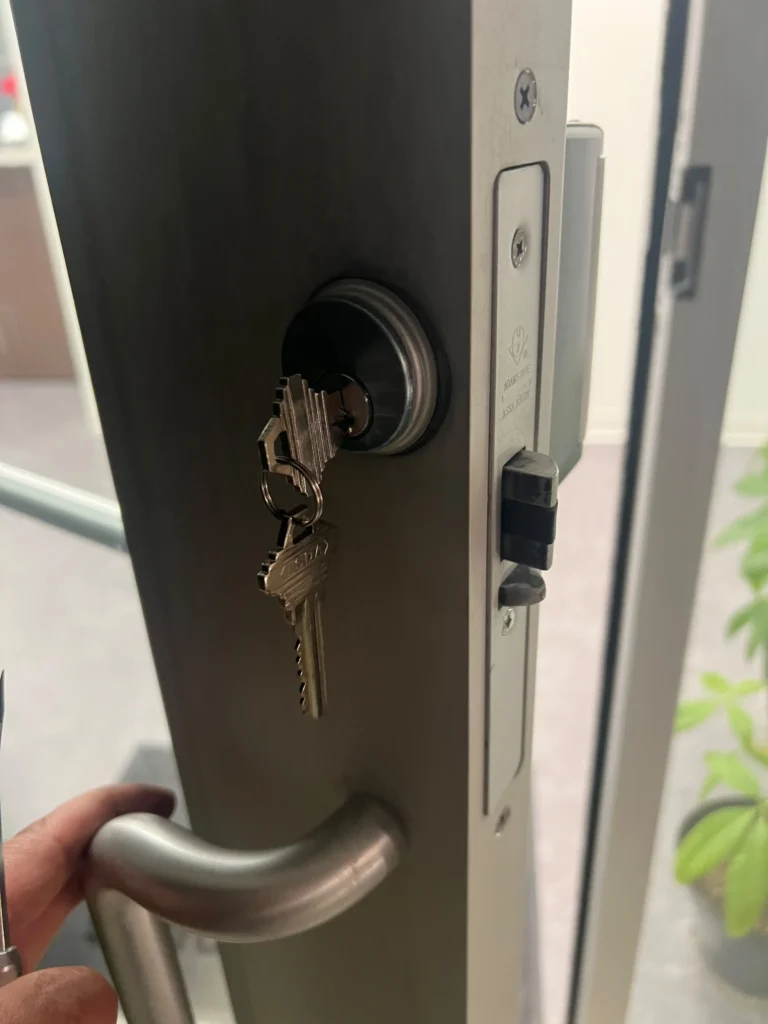
Open the door fully and turn the key with the door standing open. If the bolt throws out smoothly with nothing in its way, the lock is fine and the problem is alignment between the door and the frame. If it is stiff, gritty or reluctant with the door open, the trouble is inside the lock.
Look at the strike plate. Bright scrape marks on the metal, or gouges in the frame around it, mean the bolt is arriving in the wrong place. That is the door, not the lock.
Notice what you do without thinking. If you lift the handle, lean on the door or pull it toward you before the key will turn, you have been compensating for a misalignment, possibly for years.
What We Do About It
Adjustment, in most cases
Most flood-related door faults are fixed by getting the bolt and the strike back into line: repositioning the strike plate, packing or resetting hinges, replacing screws with longer ones that reach past the softened timber into something solid. This is the smallest of the possible jobs and it is the right answer more often than not.
Servicing or rebuilding the lock
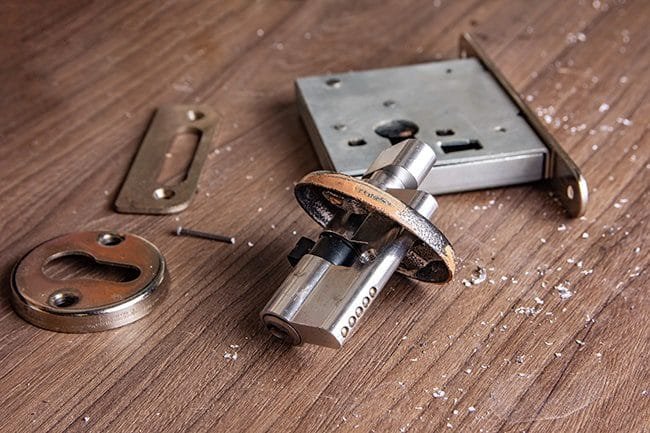
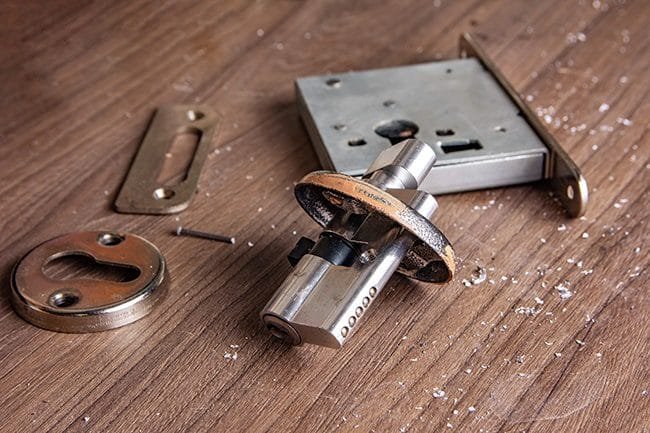
Where silt has got into a lock that is otherwise sound, it can often be stripped, cleaned and put back into service rather than thrown away. Whether that is worth doing depends on the quality of the lock — on decent hardware it usually is. More on lock repair and installation.
Replacement, when the lock has gone
Corroded springs, a seized case or a cylinder that has been ground down by grit are past saving. If the hardware has to be replaced anyway, it is the moment to fit something that will cope better next time. More on residential lock changes.
Rekeying after a clean-up
Recovery work means keys handed to builders, dryers, cleaners and insurers over weeks or months. When the property is back in use, rekeying retires every one of those keys without replacing sound hardware. More on rekeying.
Choosing Hardware That Copes Better
If a property has flooded once, it may flood again, and that is worth factoring into what goes back on the door. Solid hardware with a decent finish survives damp far better than the cheapest lockset on the shelf. A slightly longer bolt throw gives more tolerance for a frame that moves. Where a door has been replaced with a composite or metal one, the swelling problem largely disappears, though the alignment question does not.
Keypad and smart locks are a fair option on a rebuilt door, since the door is new and square, but they want a sound door to work properly — worth checking before buying rather than after. More on smart lock installation.
Where We Do This Work
Anywhere we cover, but it comes up most along the Meramec: Valley Park, where the levee was only finished in 2006, and Fenton, where parts of the city flood often enough that the fire district publishes maps for it. The same work turns up on any property that has had a burst pipe, a failed sump pump or a basement door under water. The full list of towns we reach is on our areas index.
We are mobile and based in Ballwin, so we come to the property. Our technicians are licensed and insured. Open every day, 8 AM to 10 PM.
Questions We Get Asked
My door has stuck since a flood years ago. Is it too late to fix?
No. Timber that moved after a flood stays moved, so the misalignment does not heal itself with time — but it also does not get harder to correct. Repositioning a strike plate is the same job whether the water came last month or in 2015.
The lock survived the flood and works fine. Should I still have it checked?
It is worth it. Silt and corrosion do their damage inside, where you cannot see it, and a lock that came through a flood often fails months later with no warning. Checking it is cheaper than being locked out by it.
Do I need a new door?
Usually not for lock and latch trouble alone. A door that has swollen and dried is normally still serviceable once the hardware is realigned. A new door is a question of the door’s own condition — delamination, rot at the bottom rail, a frame that has failed — not of whether the lock works.
Will insurance cover this?
That is between you and your insurer, and we are not the right people to advise on it. What we can do is tell you plainly what we found and what we did, which is usually what a claim needs.
What should I tell you when I call?
That the property has had water in it, roughly when, and whether the key turns freely with the door standing open. Those three things tell us whether we are coming to adjust a door, service a lock or replace hardware.