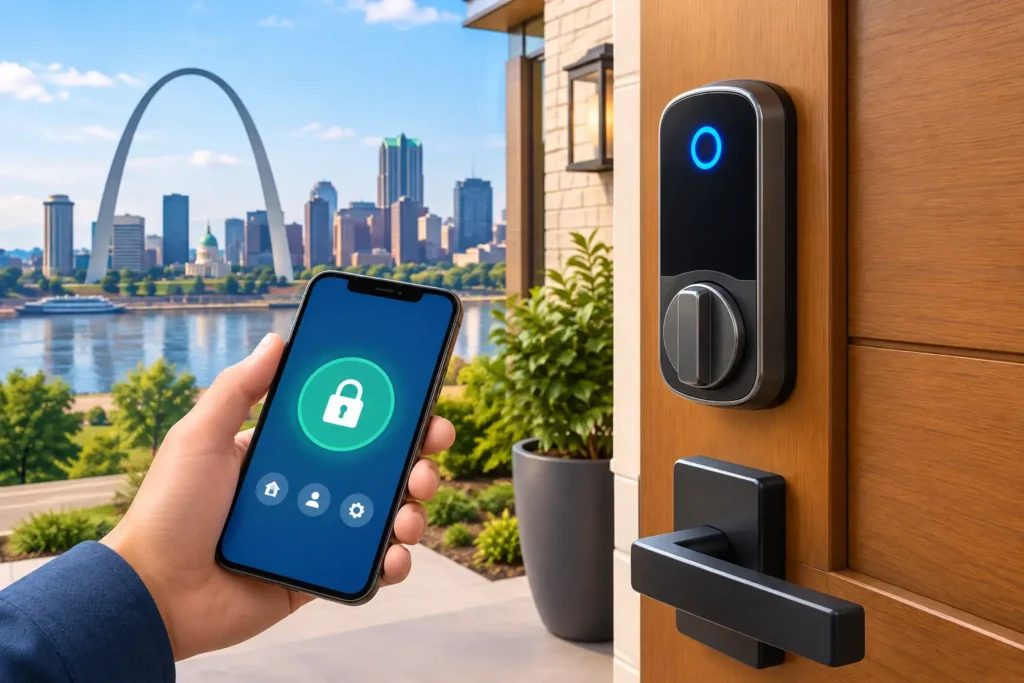
A spare key under the mat solves one problem and creates another. For many homeowners, landlords, and business owners in West St. Louis County, smart locks offer a more controlled way to manage who can enter, when they can enter, and when that access should end. The right lock can make daily routines easier, but it still needs to be installed correctly on a door that closes, latches, and secures properly.
What smart locks do differently
A traditional deadbolt depends on a physical key. A smart lock adds electronic access methods, commonly a keypad code, phone app, key fob, fingerprint reader, or a combination of these. Many models still include a key cylinder for backup, while others are designed around electronic access only.
The practical benefit is access management. A homeowner can give a dog walker a temporary code instead of handing over a key. A landlord can change a code between tenants without collecting copies of old keys. A business can remove a former employee’s code immediately rather than wondering whether a key was returned.
That convenience does not make every smart lock the right choice for every door. The lock, door, frame, strike plate, Wi-Fi setup, and the people using the system all matter. A smart lock is part of a complete entry system, not a replacement for sound door hardware and good security habits.
Choosing smart locks for your property
Start with the type of access you actually need. A family that wants to stop carrying house keys may be well served by a dependable keypad deadbolt. A vacation property owner may value remote code changes and activity notifications. An office, medical practice, or retail operation may need scheduled access, audit records, and a broader access-control plan.
Keypad, app, biometric, or key access?
Keypad locks are often a straightforward fit for residential doors and smaller businesses. They allow individual codes and avoid the problem of extra keys circulating among relatives, contractors, staff, or tenants. Choose a model with enough code capacity for your needs and a clear method for deleting old codes.
App-connected locks add remote control and notifications. They can be useful when you are away from a property or need to let in a service provider. However, these features depend on the system’s connection, account setup, and battery condition. If remote access is the main reason for the purchase, confirm whether the model requires a nearby hub, compatible Wi-Fi, or a separate subscription.
Fingerprint access is convenient for some households, but it is not always ideal for every setting. Dirty hands, wet fingers, cold weather, and high-traffic use can affect consistency. It works best when users also have a reliable backup method, such as a code or physical key.
A key override can be reassuring during a dead battery or phone problem. On the other hand, a key cylinder reintroduces the need to control and rekey physical keys. There is no universal right answer. The best option depends on how the property is used and who needs access.
Make sure the lock fits the door
Before buying a lock, verify that it is designed for your door type and existing hardware. Most residential smart deadbolts are intended for standard hinged doors with a properly aligned deadbolt bore, latch, and strike. They may not fit storm doors, narrow stile doors, certain mortise lock setups, or doors with unusual thickness.
Door alignment is just as important. If a deadbolt already drags against the strike plate, an electronic lock may strain as it tries to extend or retract the bolt. That can shorten battery life, create error messages, and leave the door difficult to secure. The correct repair may involve adjusting the strike, hinges, frame, or door before installing the new lock.
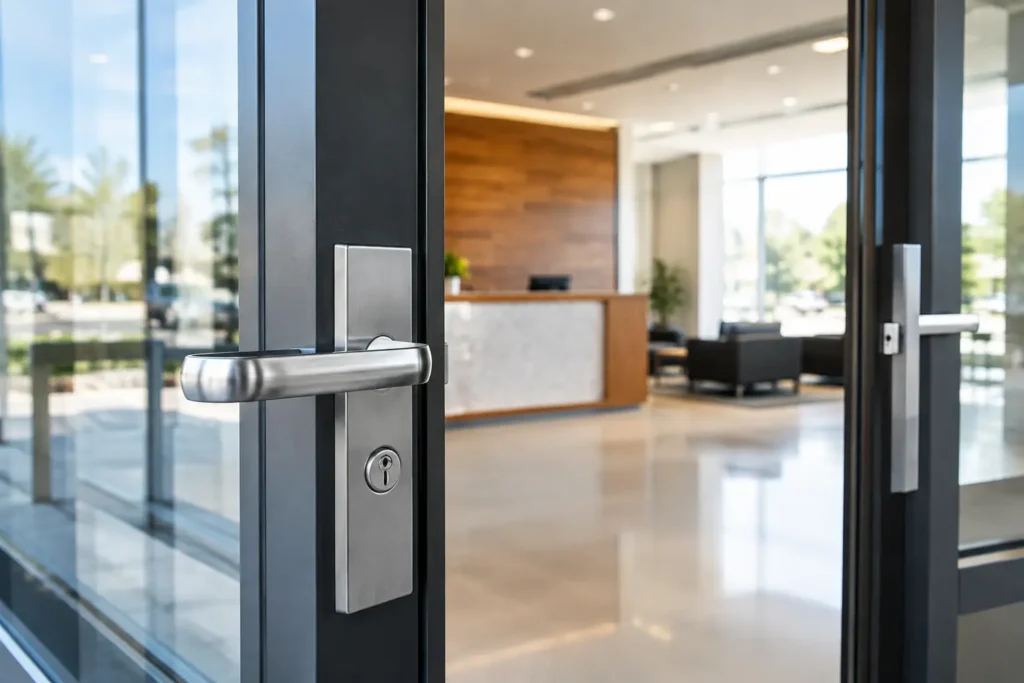
For commercial doors, compatibility deserves extra attention. An exterior aluminum storefront door, fire-rated door, panic hardware, or door with a closer may require commercial-grade hardware and a different access solution. A residential consumer lock is rarely the right answer for a busy public entrance.
Security and reliability are not the same thing
A smart lock should be judged on more than app features. Look at the quality of the deadbolt, the strength of the strike installation, battery warnings, code-management options, and how the lock behaves when power or internet service is interrupted.
Most battery-operated locks will continue to operate at the door even if Wi-Fi goes down. Remote features may be unavailable, but a keypad code or mechanical key can still work. That distinction matters. Ask what functions remain available during an internet outage before relying on a lock for remote management.
Use unique access codes rather than a shared code for everyone. Delete temporary codes when work is complete, and change codes when a relationship or tenancy ends. Avoid using easy-to-guess numbers such as a street address, birthday, or repeating sequence.
For connected locks, protect the account as carefully as the front door. Use a strong, unique password, turn on multi-factor authentication if available, and keep the app and lock software updated. A good lock does not eliminate the need for sensible account security.
When professional smart lock installation helps
Many smart locks are sold as do-it-yourself products, and a handy homeowner may be able to install a compatible model on a well-aligned door. Professional installation is especially worthwhile when the door is sticking, the existing deadbolt is loose, the new lock does not match the old bore holes, or the property has multiple doors that need to work together.
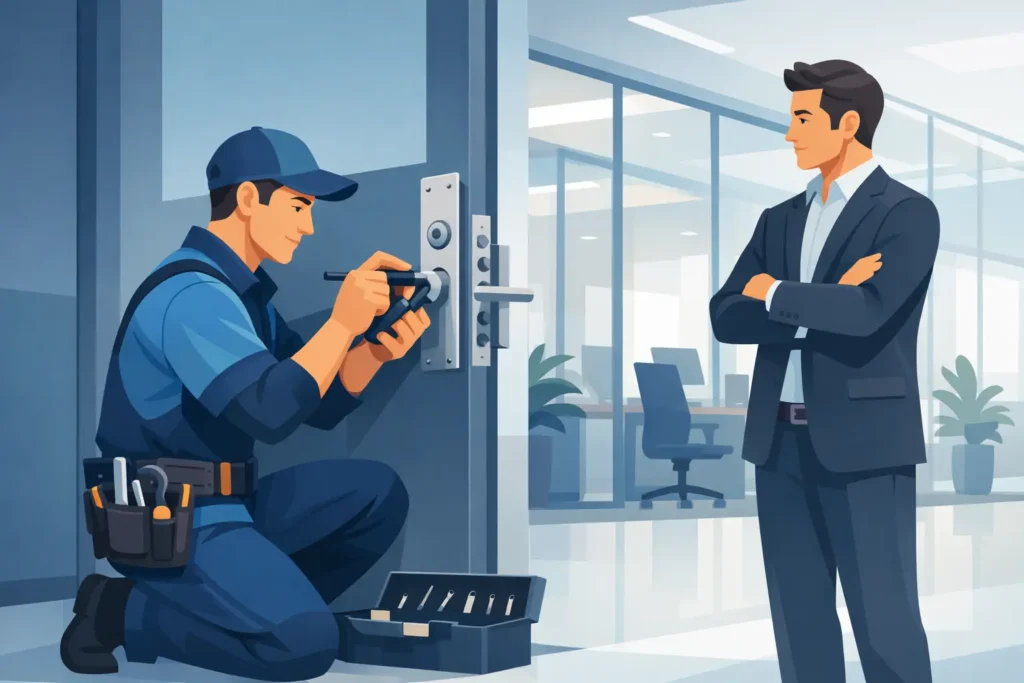
A locksmith can check the lock’s fit, confirm that the bolt enters the strike cleanly, secure the hardware without damaging the door, and test every access method before leaving. Installation is also a good time to inspect the rest of the entry. A solid deadbolt provides limited value if the strike plate is secured with short screws or the door frame is damaged.
Property managers and landlords often benefit from a consistent plan across units. That may mean the same lock model, documented code procedures, clear turnover steps, and a decision about whether mechanical keys should be rekeyed between tenants. Consistency makes maintenance easier and reduces confusion when someone needs help at the property.
For businesses, the conversation should begin with operations, not just hardware. Consider who opens and closes, who needs after-hours access, what happens when an employee leaves, and whether a door also needs panic hardware or a door closer. A simple keypad lock may be sufficient for a back office, while a warehouse, clinic, or multi-user facility may need a more structured access-control approach.
Smart lock problems that need attention
Electronic locks are still locks, and their problems are often mechanical. A keypad that appears unresponsive may have weak batteries. A bolt that will not extend fully may be hitting a misaligned strike. A lock that repeatedly disconnects from an app may be too far from the hub or dealing with a network setting issue.
Do not force the thumbturn or repeatedly slam a door to make a lock work. Forcing hardware can turn a small alignment issue into a damaged lock, door, or frame. Replace batteries promptly when warnings appear, using the battery type recommended by the manufacturer. If a lock begins behaving inconsistently, it is better to address it before it becomes a home or business lockout.
A mobile locksmith can diagnose whether the issue is installation, door alignment, worn hardware, a failed component, or a setup problem. Locks R Us Locksmith serves Ballwin, Chesterfield, Wildwood, Town and Country, Des Peres, Kirkwood, Fenton, Manchester, Valley Park, Eureka, Pacific, Washington, Creve Coeur, Ladue, and surrounding Greater St. Louis communities with on-site lock and door hardware service.
A practical approach before you buy
Think through the normal and unusual moments at the door. Who needs access every week? Who needs access only once? What happens if your phone is lost, batteries are low, or the internet is out? Can every regular user operate the lock comfortably? The answers usually point toward a simpler and more dependable choice than the model with the longest feature list.
A well-chosen smart lock can make access easier to manage without making your security complicated. Start with a solid door and properly functioning deadbolt, choose features you will actually use, and have installation concerns addressed before they become a problem at the entry.