A stolen vehicle, a broken key, or a car left unlocked in a busy parking lot can turn an ordinary day into a difficult one fast. Good vehicle security is not about living on edge. It is about building a few dependable habits that reduce easy opportunities for theft, protect your belongings, and help you respond calmly when something goes wrong.
For drivers throughout Ballwin, Chesterfield, Wildwood, Manchester, Fenton, Kirkwood, and nearby West St. Louis County communities, the practical details matter. Where you park, how you handle spare keys, and what you leave in view can make a real difference. A vehicle’s factory security features are useful, but they work best when paired with careful everyday choices.
1. Treat Your Keys Like an Access Device
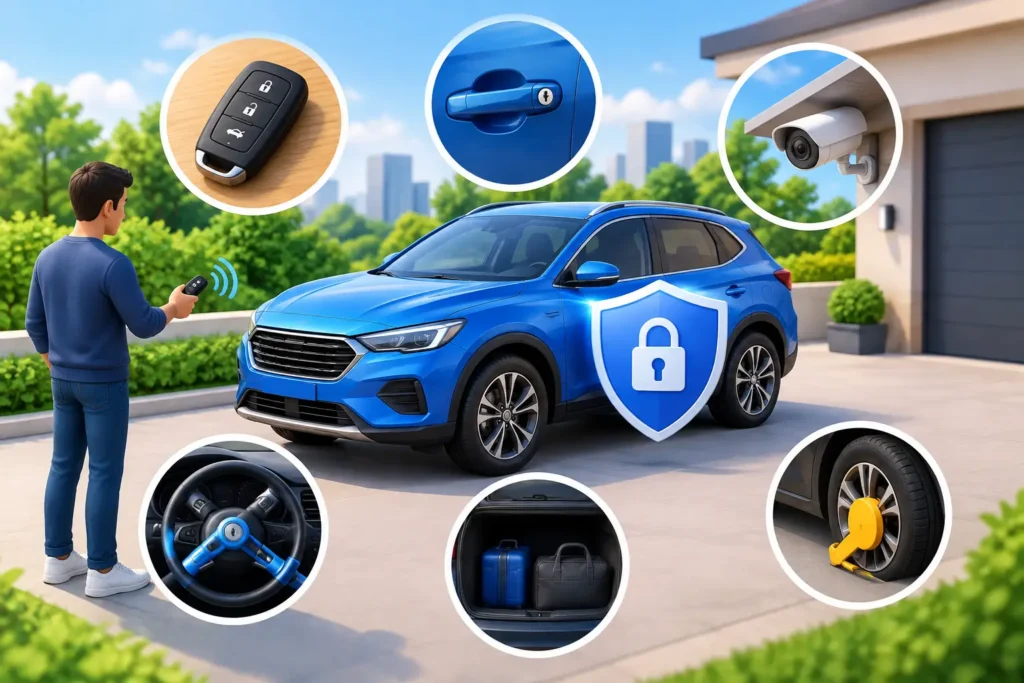
Many vehicle security problems begin before anyone reaches the car. Modern keys and key fobs do more than start an engine. They can unlock doors, open trunks, and in some cases allow a vehicle to start while the fob is nearby. Leaving a key fob near an exterior door or in an unsecured bag creates an unnecessary risk.
Keep daily keys in a consistent, secure place at home. If your vehicle uses a proximity fob, avoid storing it directly beside a front door, garage entry, or ground-floor window. A shielded key pouch may be worth considering for some vehicles, particularly if you are concerned about relay theft. It is not necessary for every driver, but it can be a sensible extra layer depending on the vehicle and where it is parked.
Spare keys deserve the same care. Hiding one under a vehicle, inside a magnetic box, or behind a license plate may feel convenient, but those locations are well known. A better option is to keep the spare in a secure place at home or with someone you trust. If a key is missing and you cannot account for it, do not assume it will turn up. The right response may be replacing or reprogramming keys, depending on your vehicle’s system.
2. Make Parking Choices That Reduce Opportunity
Most drivers cannot choose a perfect parking space every time, but small decisions still help. When possible, park in well-lit areas with regular foot traffic, visible entrances, and working cameras. At home, use a garage when available and keep the garage door closed once you are inside. A driveway is generally better than street parking, though lighting and visibility still matter.
At apartment complexes, shopping centers, trailheads, and commuter lots, avoid isolated spaces when there are reasonable alternatives. Park with doors locked, windows fully closed, and the vehicle alarm armed if equipped. Before walking away, take a second to check that the doors actually locked. Remote signals can be interrupted, and a quick handle check is often more reliable than assuming the fob did its job.
Do not leave the engine running while you run into a store, warm up the vehicle, or make a quick stop. Even a brief absence gives someone an opportunity to drive away. Cold Missouri mornings can make remote start attractive, but use the vehicle’s factory remote-start function rather than leaving it idling with a key inside.
Vehicle Security Starts With What Is Visible
A locked car can still attract unwanted attention if valuables are easy to see. Bags, phones, wallets, sunglasses, tools, shopping bags, and loose change all signal that there may be more worth taking. The best practice is to remove valuables from the vehicle whenever possible, not simply move them to the trunk after arriving at your destination.
Someone watching a parking lot may notice items being transferred into the trunk. If you need to store something, do it before you leave home or before arriving at your destination. If that is not practical, choose a more private location and keep the process quick.
Paperwork should be handled carefully as well. Avoid leaving your registration, insurance documents, or mail with personal information in plain view. Some vehicle documents are required or useful to keep in the car, so place them in a closed compartment rather than the center console or door pocket. Never leave a vehicle title in the car.
For work vehicles, this issue is especially significant. Ladders, diagnostic equipment, tools, inventory, and devices can make a van or truck an appealing target. Businesses may need more than basic door locks, including protected tool storage, controlled key access, and procedures for who takes vehicles home. The right setup depends on what the vehicle carries and whether multiple employees use it.
3. Maintain the Locks and Entry Points You Depend On
A sticky door lock, damaged ignition, broken remote, or worn key is more than an inconvenience. It can leave you locked out at the wrong time or encourage you to use force when the key does not work smoothly. Forcing a key can break it, damage the lock, or create a more expensive repair.
Pay attention to early warning signs. If a physical key takes repeated attempts to turn, a door does not latch securely, or a fob works only intermittently, address the issue before it becomes an emergency. The cause could be a worn key, a weak fob battery, a damaged lock cylinder, a door alignment problem, or an electrical issue. The appropriate repair depends on the vehicle, so it is better to diagnose the problem than guess.
Keep in mind that not every automotive concern is a locksmith issue. Warning lights, battery problems, alarm faults, and some electronic ignition concerns may require a mechanic, dealer, or automotive electronics specialist. A professional locksmith can help with many lockouts, keys, and vehicle entry issues, while also being clear about when another type of service is the better fit.
4. Know What to Do When a Key Is Lost or Stolen
Losing keys is stressful because the concern is not only getting back into the vehicle. You may also wonder whether someone could identify your car and use the key later. Start by retracing your steps and checking the places where the key could reasonably be. If the key was lost in a public place, stolen with identification, or disappeared under suspicious circumstances, act more quickly.
The best next step depends on the vehicle’s age and key system. Some situations call for a replacement key. Others may call for removing a lost key from the vehicle’s memory and programming a new one, so the missing key will no longer start the vehicle. Bring together the information a service provider may need, such as proof of ownership, the vehicle identification number, make, model, and year.
Do not wait until your only working key is gone. If you have just one key or fob, arranging a spare while the original is still available is usually less disruptive than dealing with a complete key loss. It also gives you a practical backup if a fob battery fails or a key is damaged away from home.
Vehicle Security During a Lockout
A lockout can make even careful drivers feel rushed. That is when avoidable damage often happens. Avoid prying a door frame, breaking a window, or using improvised tools that can damage weather stripping, wiring, door panels, or the lock itself. Modern vehicles have side-impact components, airbags, and electronics inside the door area, so forced entry is rarely a good tradeoff.
Move to a safe location if you can, especially near traffic, in severe weather, or late at night. If children, pets, or a vulnerable person are locked inside, call emergency services immediately. For a standard lockout, a qualified mobile locksmith can assess the vehicle and use careful entry methods appropriate to the situation.
Locks R Us Locksmith provides mobile locksmith service for drivers in Ballwin and throughout surrounding communities, including Town and Country, Des Peres, Valley Park, Eureka, Pacific, Creve Coeur, Ladue, and Washington. Clear communication about the vehicle, your location, and the problem helps set realistic expectations before service begins.
5. Build Security Into Your Routine, Not Just Your Vehicle
The strongest protection is usually a routine rather than a single product. Lock the vehicle every time. Take keys with you. Keep valuables out of sight. Park thoughtfully. Deal with damaged keys and locks before they fail. Those steps are simple, but they close off many of the easy opportunities that lead to theft, break-ins, and preventable lockout problems.
If you manage company vehicles, rental properties with assigned parking, or a family with several drivers, put the routine in writing. Decide who holds spare keys, where vehicles should be parked, and what employees or family members should do if a key is lost. A little planning can prevent confusion when time is short.
The goal is not to make a vehicle impossible to access. It is to make unauthorized access less convenient, protect what is inside, and ensure you have a sensible plan when keys or locks stop working. A few steady habits today can save you from a much more difficult situation later.