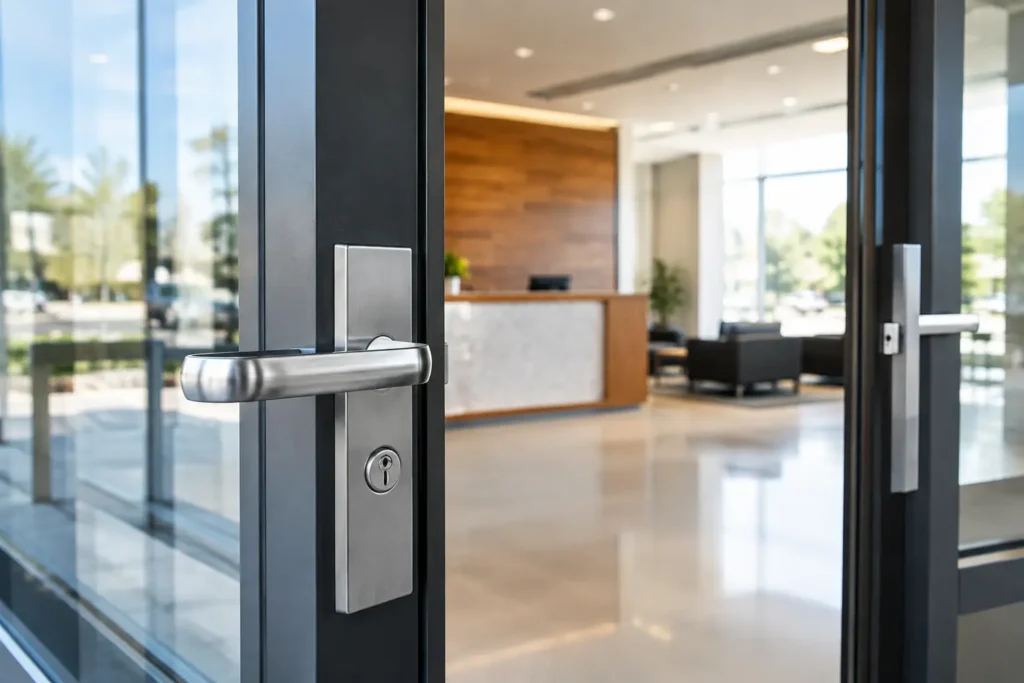
Most homes do not need one perfect lock. They need the right lock on each door. A front door, a garage entry door and a bedroom door face very different risks, and the lock on each should match that job. This guide walks through the house one door at a time, so you can see where your money matters most and where a simple lock is all you need.
Start With the Doors That Face Outside
Before you compare brands or features, list every door that opens to the outside. That usually means the front door, a back or side door, the door from the garage into the house, and any sliding patio door. These are the doors a burglar will try, so they deserve the strongest hardware. Interior doors come last.
It also helps to know who uses each door. A door the whole family uses ten times a day needs a lock that is easy to work. A door that is rarely opened can lean toward strength over convenience.
The Front Door
The front door is the one everyone sees and the one most people use. It should have two things: a handle set for everyday latching and a deadbolt for real security. The deadbolt does the protecting.
When you choose a deadbolt, look at its grade. Grade 1 is the toughest residential rating, Grade 2 is common and solid, and Grade 3 is light duty. Our guide to deadbolt grades explained for homeowners covers what each grade means in plain words. A strong deadbolt also needs a strong strike plate with long screws that reach the wall framing, or a hard kick can still break the frame.
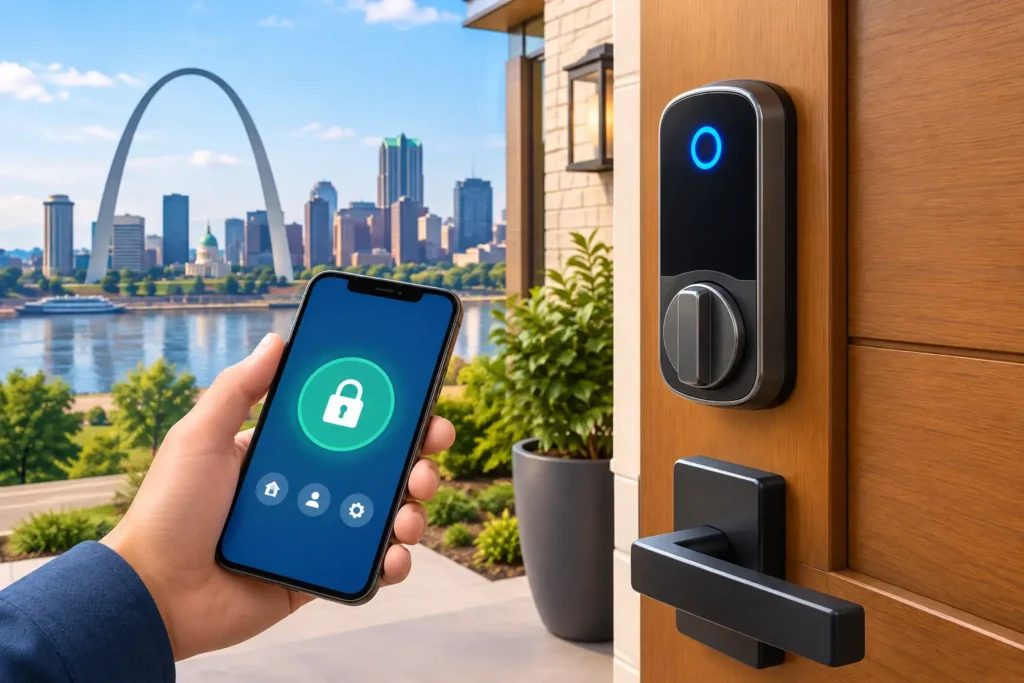
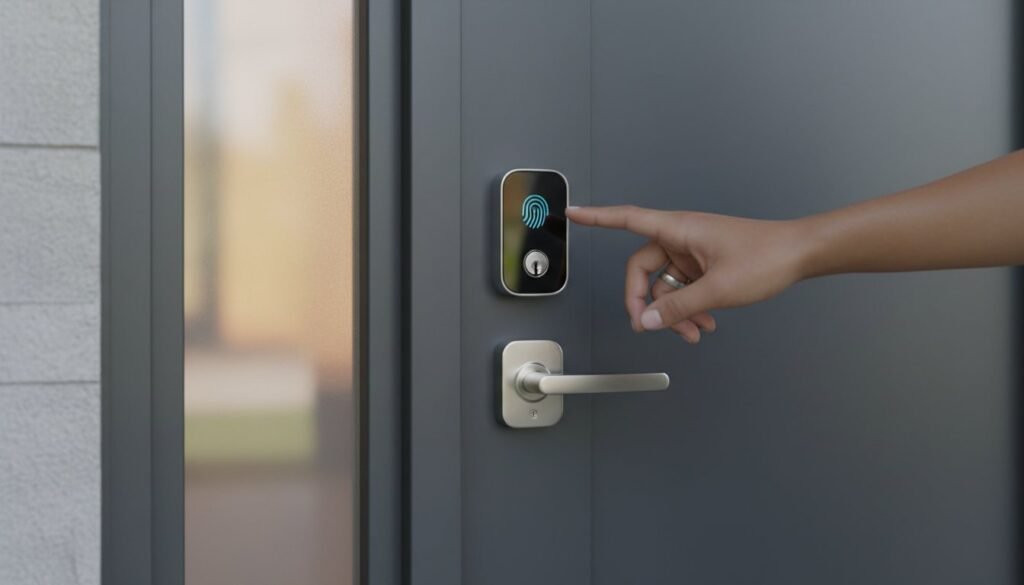
If you want to stop carrying keys, the front door is also the most common place for a keypad or smart lock. Read smart locks vs. traditional deadbolts before you decide, and see top keyless entry options for St. Louis homes for the main types.
The Back or Side Door
Back doors are often less visible from the street, which makes them a favorite target. Treat them like a second front door: a solid deadbolt and a reinforced strike plate. If the door has glass close to the lock, think about a deadbolt that cannot be opened by simply reaching through a broken pane, and ask a locksmith which option suits your door.
It is easy to forget the back door when you rekey after moving in. Make sure it is included. Our guide to rekeying locks after moving into a new home explains why every outside lock should be done at the same time.
The Garage Entry Door
The door between the garage and the house is one of the weakest points in many homes. Once someone is inside the garage, they are out of sight and can work on that door for as long as they like. Yet it often has only a basic knob lock.
Give this door a proper deadbolt and a strong strike plate, just like the front door. Our list of 7 garage entry door security upgrades that work goes through the options in order of value.
The Sliding Patio Door
Sliding doors use a different kind of lock, usually a small hook latch inside the frame. On its own it is not very strong. The good news is that simple add-ons make a big difference: a secondary lock near the bottom or top of the door, a bar in the track, and a check that the door cannot be lifted out of its frame. See how to upgrade patio door security at home for step-by-step ideas.
Bedrooms and Bathrooms
Interior doors do not need security locks. They need privacy locks, the kind with a push button or turn button on the inside and an emergency release on the outside. That release matters: a parent can open the door quickly if a child locks themselves in. Avoid fitting keyed deadbolts to bedroom doors, as they can slow you down in an emergency.
A home office or a room that holds important papers is the exception. A keyed handle set is fine there, as long as everyone in the house knows where the key is kept.
The Shed or Detached Building
Sheds and detached garages hold tools, bikes and equipment, and they are often out of sight. A cheap padlock on a thin hasp is easy to cut or pry off. Look for a closed-shackle padlock and a heavy hasp fixed with bolts, not short screws. If the building has a regular door, fit a deadbolt to it like any outside door.
Keep Your Keys Simple
Once each door has the right lock, think about the keys. Many homeowners like one key that opens every outside door. A locksmith can usually key your locks alike if they are compatible, which means fewer keys on the ring and less confusion. If keys have gone missing, rekeying is often cheaper than replacing the lock. Our comparison of rekeying vs. replacing locks explains when each one makes sense.
A Quick Door-by-Door Checklist
| Door | What it needs |
|---|---|
| Front door | Graded deadbolt, strong strike plate, optional keypad or smart lock |
| Back or side door | Deadbolt and strong strike plate, same as the front |
| Garage entry door | A real deadbolt, not just a knob lock |
| Sliding patio door | Secondary lock plus a bar in the track |
| Bedrooms and bathrooms | Privacy lock with an outside emergency release |
| Shed or detached building | Heavy hasp with a closed-shackle padlock, or a deadbolt |
When to Call a Locksmith
You can do some of this yourself, like adding a patio bar or swapping a bedroom privacy set. Other jobs are best left to a professional: fitting a deadbolt to a door that has never had one, reinforcing a strike plate, keying several locks alike, or installing a smart lock on an older door. A mobile locksmith brings the tools to you and can check every door in one visit.
Locks R Us Locksmith covers West St. Louis County with mobile service, open daily from 8 AM to 10 PM. If you want help choosing the right lock for each door, call (636) 628-7803. For a deeper look at picking a single lock, read How to Choose a New Lock for Your Home: A Professional’s Guide.